Vega Neutral
A vega-neutral position seeks to reduce net sensitivity to changes in implied volatility.
Vega neutral describes an options position or portfolio whose net value is intended to be relatively insensitive to small changes in implied volatility. The goal is to reduce net Vega, not to remove every risk in the trade.
Vega neutrality is local and temporary. It depends on the option series, strike, expiration, volatility surface, and model assumptions used to calculate the Greeks.
Net Vega
A simple portfolio-level vega estimate is:
where:
- \(q_i\) is the signed quantity of each option position
- \(\text{Vega}_i\) is the vega of that option
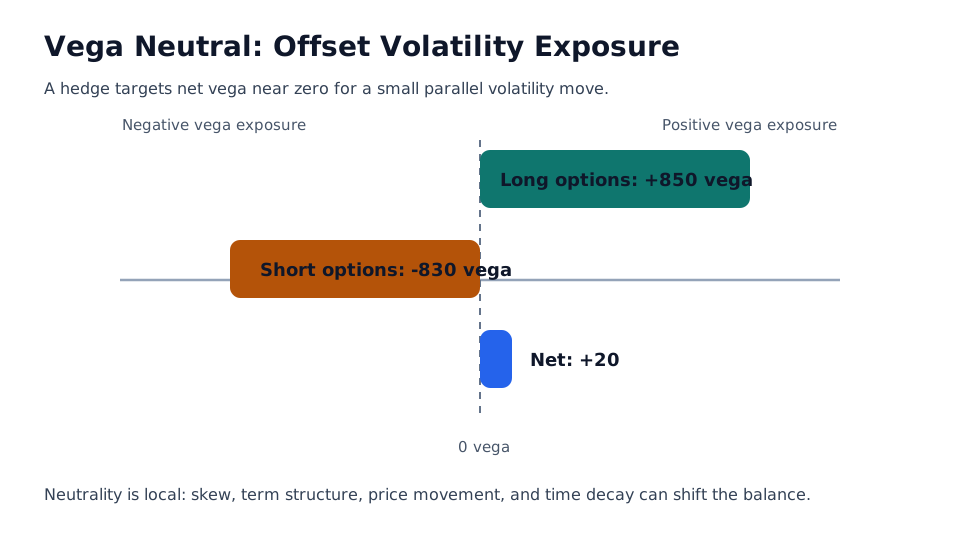
If a book has +850 vega from long options and -830 vega from short options, the net is about +20 vega. That may be close to neutral for a small parallel move in implied volatility, but it is not a guarantee against volatility-surface shifts.
How Traders Build It
Vega-neutral positions usually combine options with different strikes, expirations, or underlyings. A trader may offset long-vega positions with short-vega positions, or use spreads where one leg’s volatility exposure partly offsets another.
Common contexts include:
- volatility arbitrage and relative-value books
- market-maker inventory hedging
- earnings-event positioning
- calendar and diagonal spreads
- portfolio hedges where implied-volatility exposure is intentionally reduced
The position may still carry Delta, Gamma, Theta, liquidity, assignment, and margin risk.
What Can Break The Hedge
| Risk | Why vega neutrality may fail |
|---|---|
| Volatility skew changes | Different strikes may not move by the same volatility amount. |
| Term-structure changes | Near-term and long-term implied volatility can move differently. |
| Underlying price movement | Delta and gamma changes can alter the option book before rebalancing. |
| Time decay | Vega changes as expiration approaches. |
| Liquidity | The hedge may be expensive or impossible to adjust at the modeled price. |
Public Source Checks
The Options Industry Council’s Greeks overview explains vega as sensitivity to changes in implied volatility. Use the OCC Options Disclosure Document for standardized-options risk disclosure before treating any options hedge as complete.
Related Terms
- Implied Volatility: The volatility input vega is measuring sensitivity to.
- Delta Neutral Strategy: Position design that reduces directional exposure.
- Theta Neutral: Position design that reduces net time-decay sensitivity.
- Option Value: The value that changes when volatility assumptions move.
- Volatility: Broader concept behind implied-volatility risk.