Put Option
Option contract giving the buyer the right to sell an asset at a fixed strike price before expiration.
A put option gives the buyer the right, but not the obligation, to sell an underlying asset at a fixed strike price before or at expiration, depending on the contract style.
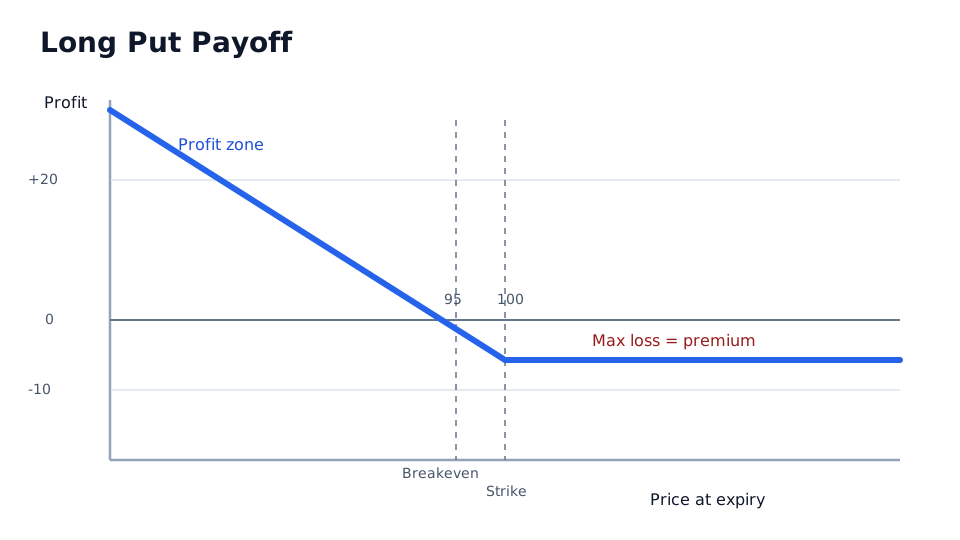
The buyer pays a premium for that protection or downside exposure. That premium is the maximum loss for a long put.
Why a Put Option Matters
Puts matter because they are one of the clearest ways to express or manage downside:
traders can profit from a falling asset price
investors can hedge a long position
risk can be limited to the premium paid
That makes the long put a core contract in both trading and portfolio protection.
How It Works in Finance Practice
A put option is shaped by:
expiration
premium
the market price of the underlying asset
If the asset finishes below the strike, the put has intrinsic value. If it finishes above the strike, the option expires worthless.
As with calls, traders also have to think about:
Higher expected volatility often makes puts more expensive because downside protection becomes more valuable when markets are nervous.
Payoff at Expiration
The long-put payoff rises as the underlying falls, while maximum loss stays limited to the premium paid.
At expiration, payoff before premium is:
Net profit after premium is:
where:
\(K\) is the strike price
\(S_T\) is the asset price at expiration
What Changes a Put’s Value
A put option’s value is affected by more than whether the underlying price falls. Important drivers include:
- underlying price relative to the strike
- time remaining until expiration
- implied volatility and downside demand
- expected dividends or distributions
- interest rates
- bid-ask spread and contract liquidity
- exercise style and settlement terms
The buyer is long downside optionality. The seller accepts an obligation that can create large losses if the underlying falls sharply.
Put Option vs. Short Selling
| Feature | Long put | Short stock |
|---|---|---|
| Maximum loss | Premium paid | Potentially very large if the stock rises |
| Borrow requirement | No stock borrow needed for the put itself | Usually requires borrow availability and financing |
| Time limit | Expires | Can remain open if borrow and margin remain available |
| Upside if stock falls | Limited by stock approaching zero, after premium | Limited by stock approaching zero |
| Main cost | Premium and spread | Borrow cost, margin, dividends, and mark-to-market risk |
A put can give defined-risk bearish exposure, but the premium and expiration date create a hurdle that short stock does not have in the same way.
Public Source Checks
Use primary or regulatory sources before treating a put option as simple downside insurance.
- The OCC Characteristics and Risks of Standardized Options explains standardized option contract mechanics, rights, obligations, exercise, assignment, and risks.
- FINRA’s options overview explains option approval, exercise, assignment, and why options are not appropriate for every investor.
- The Investor.gov introduction to options explains option premiums, calls, puts, and basic option-risk terms.
- For a real trade, verify strike, expiration, exercise style, settlement type, bid-ask spread, volume, open interest, contract multiplier, and corporate-action adjustments.
Risk Controls
Before buying or selling a put, define:
- maximum premium at risk for a long put
- assignment and margin exposure for a short put
- breakeven at expiration
- hedge objective or downside price target
- implied-volatility context at entry
- whether the put protects the right asset and time window
- exit, roll, or exercise plan before expiration
Related Terms
- Call Option: The counterpart that gives the right to buy.
- Strike Price: The fixed sale price in the contract.
- Option Premium: The price paid for the put option.
- Hedging: One of the main reasons investors buy puts.
- Implied Volatility: A major driver of put value, especially during market stress.
- Protective Put Strategy: Uses puts to create a downside floor for an owned asset.
Review Checklist
Before relying on a put-option analysis, document:
- underlying, strike, expiration, option style, and contract multiplier
- premium, bid-ask spread, volume, open interest, and execution plan
- breakeven, maximum loss, and expected downside payoff range
- implied volatility and expected volatility change
- hedge ratio, covered exposure, or bearish thesis
- assignment and margin treatment if the put is sold
- exit, roll, exercise, or expiration plan