Yield-Based Option
A yield-based option is an option whose payoff is tied to an interest-rate or yield level rather than to a bond price.
A yield-based option is an option whose payoff is tied to a yield or interest-rate level rather than to the price of a bond, stock, ETF, or futures contract.
Yield-based options are niche instruments. They are used mainly to express or hedge a view on interest rates, especially when the risk being managed is the direction of yields rather than the price of a specific fixed-income security.
How Yield-Based Options Work
A yield-based call generally benefits when the referenced yield rises. A yield-based put generally benefits when the referenced yield falls.
That is the opposite of how many bond-price trades feel. Bond prices and yields usually move in opposite directions: when yields rise, existing fixed-rate bond prices often fall; when yields fall, existing fixed-rate bond prices often rise.
The diagram separates the yield reference from bond-price intuition. A yield-based call is usually a view on higher yields, while a bond-price call is usually a view on higher prices.
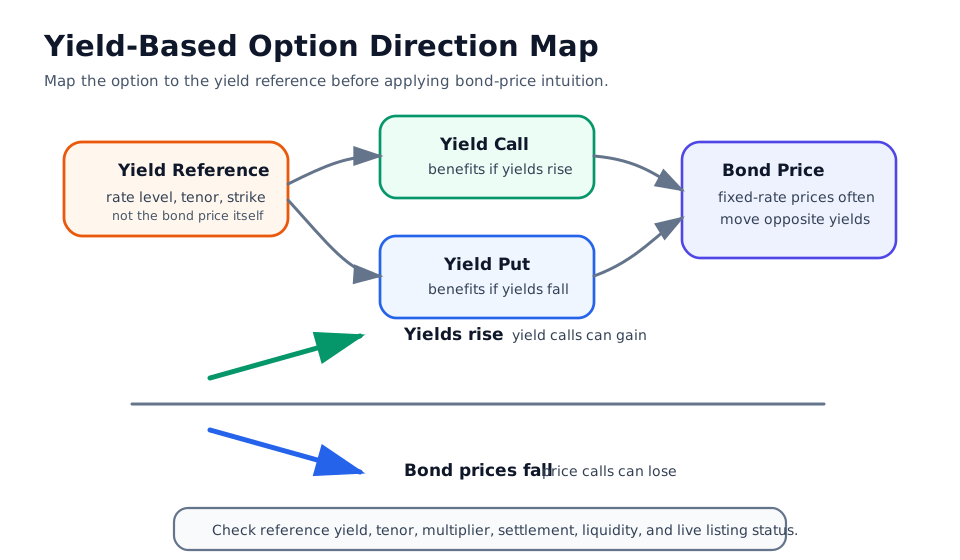
| Rate view | Yield-based option position that may align | Bond-price intuition |
|---|---|---|
| Yields rise | Long yield-based call | Bond prices may fall |
| Yields fall | Long yield-based put | Bond prices may rise |
The exact payoff depends on the contract’s reference yield, multiplier, strike convention, expiration, settlement method, and whether the product is exchange-listed or structured over the counter.
Why Traders Use Them
Yield-based options can help isolate an interest-rate view without requiring the trader to own, short, or hedge a specific bond position.
Common uses include:
- hedging a fixed-income portfolio against rate increases
- expressing a view on Treasury yields or benchmark rates
- adding convex exposure to rate moves
- separating rate risk from credit-spread or issuer-specific bond risk
- comparing a direct yield view with Treasury futures, bond ETFs, swaps, or swaptions
For most investors, Treasury futures options, bond ETF options, or interest-rate futures options may be more familiar and more liquid alternatives.
Yield-Based Versus Price-Based Options
| Feature | Yield-based option | Bond-price or ETF option |
|---|---|---|
| Reference variable | Yield or rate level | Price of a bond, ETF, futures contract, or index |
| Directional intuition | Calls benefit from higher yields | Calls benefit from higher prices |
| Main risk | Rate level, volatility, contract liquidity | Price, duration, credit, spread, liquidity |
| Common user | Rate hedger or specialist trader | Broader investor and trader base |
This distinction matters because a bullish view on yields can be bearish for bond prices. The option label must be mapped to the reference variable before the risk can be understood.
Worked Example
Assume a portfolio manager is worried that long-term Treasury yields will rise after an inflation report. A yield-based call could gain if the referenced yield rises above the strike. A bond ETF put or Treasury futures option might express a similar rate view through price instead.
The manager should compare liquidity, payoff, margin, tax, settlement, and basis risk before choosing the instrument. A yield-based option may match the rate view directly, but it may also be less liquid or less available than related price-based products.
Authority Sources
Use public sources to check product mechanics and availability:
- OCC Characteristics and Risks of Standardized Options provides the general listed-option disclosure framework for standardized options.
- Cboe U.S. options symbol directory is a starting point for checking whether a Cboe-listed option product is currently listed.
- FINRA’s options overview gives the basic options framework for rights, obligations, premiums, and expiration risk.
For a live yield-linked product, use the exchange product specification, official rule filing or contract terms, broker confirmation, and current market data. Do not rely on an old symbol, textbook label, or exam-prep description.
Related Terms
- Call Option: In a yield-based option, a call generally benefits from a higher referenced yield.
- Put Option: In a yield-based option, a put generally benefits from a lower referenced yield.
- Option Premium: The market price paid or received for the option.
- Strike Price: The strike applied to the yield or rate reference.
- Implied Volatility: Rate volatility can materially affect option value.
- Interest Rate Futures: A more common futures-based way to trade or hedge rate exposure.
Review Checklist
- Confirm the referenced yield, benchmark, tenor, multiplier, and strike convention.
- Check whether the product is currently listed and liquid.
- Map the payoff direction to the rate view before trading.
- Compare the yield-based option with Treasury futures options, bond ETF options, swaps, and swaptions.
- Verify settlement, expiration, margin, and tax treatment before using the instrument in a hedge.