Iron Condor
An iron condor is a limited-risk options strategy that profits when the underlying remains within a defined range.
An iron condor is a defined-risk options strategy built from:
- a short out-of-the-money put spread
- a short out-of-the-money call spread
Together, those four options create a trade that usually profits most when the underlying asset stays in a relatively stable range until expiration.
How the Strategy Is Built
A standard short iron condor is usually set up as:
- buy a lower-strike put
- sell a higher-strike put
- sell a lower-strike call
- buy a higher-strike call
The short put and short call are the inner strikes. The long options are the wings that cap risk.
Because the trader usually receives a net credit up front, the position is often described as a range-bound premium-selling strategy.
What the Trader Is Really Betting On
The trader is usually betting that:
- the underlying asset will remain between the short strikes
- time decay will erode the sold options
- implied volatility will not expand in a way that makes the position more expensive
This is why an iron condor is often attractive in quiet or range-bound markets and much more dangerous in markets prone to violent breakouts.
Payoff at Expiration
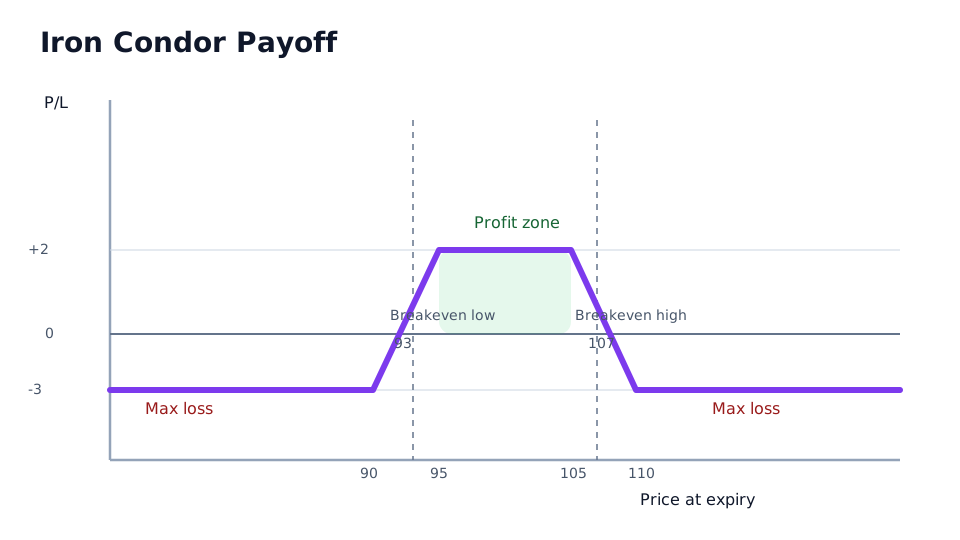
The payoff profile makes the strategy easier to read: the flat middle zone shows where the trade earns maximum profit, the breakevens mark the edges of the profitable range, and the wings cap loss on both sides.
Max Profit, Max Loss, and Breakevens
If the condor is opened for a net credit:
- maximum profit = net credit received
- maximum loss = wing width minus net credit
Breakevens at expiration are:
That means the position can still be profitable even if the underlying asset moves somewhat, as long as it stays inside the breakeven range.
Worked Example
Suppose a stock is trading at $100 and a trader opens this iron condor:
- buy 90 put
- sell 95 put
- sell 105 call
- buy 110 call
- net credit received =
$2
Then:
- max profit =
$2 - max loss =
$5 - $2 = $3 - lower breakeven =
$93 - upper breakeven =
$107
The trade works best if the stock stays near the center of the range and expires between $95 and $105.
Why Traders Misunderstand Iron Condors
Many traders see the high probability profile and assume the strategy is “easy income.”
That is a mistake.
An iron condor can still lose meaningfully when:
- the underlying asset breaks out of the range
- volatility expands after entry
- the position is opened too close to a major event
- liquidity or assignment risk complicates adjustments
Defined risk does not mean trivial risk.
Strike Selection and Credit
An iron condor is often described as a “range” trade, but the trade quality depends on strike selection and net credit.
Important inputs include:
- distance between current price and the short strikes
- width of the put spread and call spread
- net credit received relative to maximum loss
- implied volatility at entry
- time to expiration
- liquidity at all four option legs
The credit should compensate the trader for taking breakout risk. A very wide profit range can still be unattractive if the collected premium is too small relative to the loss outside the wings.
Entry and Exit Logic
A short iron condor is usually most coherent when the trader has a specific range thesis, not just a desire to collect premium.
Before entry, define:
- the expected price range through expiration
- the volatility reason for selling premium
- the maximum acceptable loss
- the adjustment or exit rule if a short strike is threatened
- whether the trade will be closed before expiration to reduce assignment and gap risk
Many traders close profitable iron condors before expiration rather than waiting for the last dollars of premium decay. That reduces late-stage gamma, assignment, and execution risk.
Public Source Checks
Use primary or regulatory sources before treating an iron condor as a simple income strategy.
- The OCC Characteristics and Risks of Standardized Options explains standardized option contract mechanics, exercise, assignment, and option-writer obligations.
- FINRA’s options overview explains option approval, risk, exercise, assignment, and why options are not appropriate for every investor.
- The Investor.gov introduction to options explains option premiums, calls, puts, and basic investor risks.
- For a real trade, verify all four option legs, quotes, open interest, expiration, contract multiplier, exercise style, margin impact, and corporate-action adjustments through the broker or exchange data source used for execution.
Risk Controls
Before entering an iron condor, document:
- net credit, wing width, maximum loss, and breakevens
- event dates during the holding period
- expected volatility contraction or stability thesis
- acceptable slippage across four legs
- assignment and early-exercise exposure on the short options
- exit rule if price approaches a short strike
- position size based on maximum loss, not premium received
Related Terms
- Bull Put Spread: One half of the iron condor structure.
- Bear Call Spread: The other half of the structure.
- Option Premium: The net credit received when the strategy is opened.
- Implied Volatility: A major driver of entry pricing and risk.
- Theta: Time decay often supports the strategy when the market stays calm.
- Iron Butterfly Strategy: A related defined-risk income strategy with the short strikes closer together.
Review Checklist
Before relying on an iron condor analysis, document:
- underlying, expiration, four strikes, contract multiplier, and option style
- net credit, spread width, maximum profit, maximum loss, and breakevens
- implied volatility context and expected volatility path
- liquidity, open interest, bid-ask spread, and multi-leg execution method
- earnings, dividend, macro, or product events during the holding period
- assignment, exercise, and margin treatment of the short legs
- exit, roll, or adjustment rule before expiration