Last Trading Day
The last trading day is the final session when an option, futures contract, or other derivative can normally be traded.
The last trading day is the final session when an option, futures contract, or other derivative can normally be traded before expiration or settlement.
It is not always the same as the expiration date. Some contracts stop trading before the final settlement value is known, while others trade through the expiration day. The exact rule depends on the product, exchange, settlement style, and broker procedures.
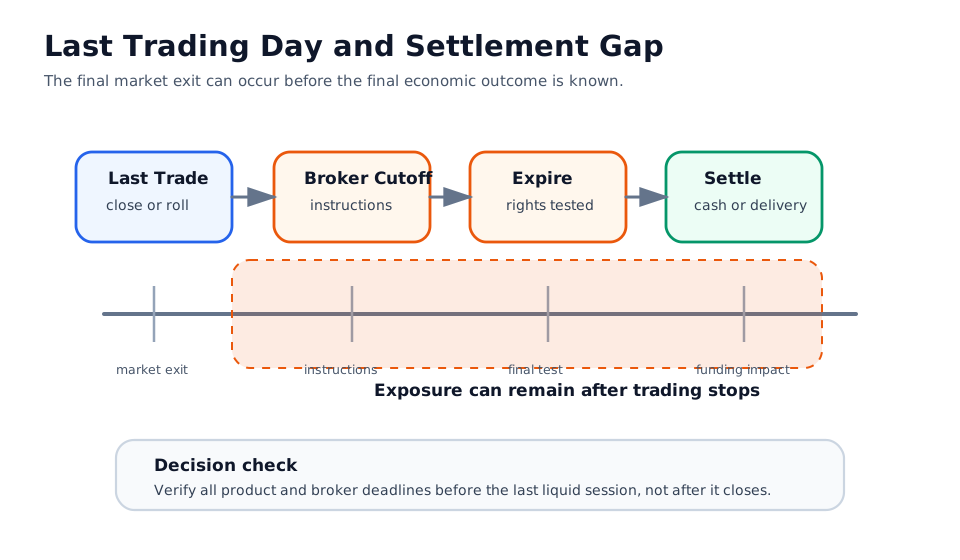
The diagram shows why the last trading day deserves its own check: the market exit deadline can close before the final settlement value or exercise result is known.
Why It Matters
The last trading day is the final practical opportunity to close, roll, hedge, or adjust a listed contract in the market. After that point, the position may proceed to exercise, assignment, cash settlement, or physical delivery.
This matters because a trader may still have economic exposure even after trading stops. For example, an AM-settled index option may stop trading before the settlement value is calculated the next morning. A physically settled futures contract may create delivery obligations if it is not closed in time.
Last Trading Day Versus Expiration
| Term | What it means | Practical risk |
|---|---|---|
| Last trading day | Final regular trading session for the contract | Loss of ability to close or roll in the market |
| Expiration date | Date when rights end or settlement is determined | Exercise, assignment, or cash settlement outcome |
| Exercise deadline | Broker or clearing cutoff for exercise instructions | Unwanted exercise or failure to exercise |
| Settlement date | Date cash or the underlying is delivered | Funding, delivery, or margin impact |
The safe workflow is to verify all four dates instead of assuming the expiration date is the only deadline.
Product Differences
Common patterns include:
- Standard listed equity options often trade through the regular market session on expiration day, but holidays and special expirations can change the calendar.
- Some index options are AM-settled, meaning the last trading day can be before the settlement value is determined.
- Weekly, daily, quarterly, and end-of-month options can have different calendars from standard monthly options.
- Futures and options on futures can have product-specific last trading day, notice, delivery, and settlement rules.
- Broker risk controls can force earlier close-out or exercise handling than the exchange rule alone would suggest.
The last trading day should therefore be treated as a contract-specific field, not a generic date.
Worked Example
Assume a trader holds an index option that stops trading on Thursday but settles based on a Friday morning opening calculation. The trader cannot close the position after Thursday’s last trading session, yet the final settlement value can still be affected by overnight news and Friday morning prices.
That gap is the reason last trading day risk is different from ordinary expiration-day risk. The market exit window can close before final economic exposure is resolved.
Authority Sources
Use public sources to verify the applicable calendar and contract mechanics:
- OCC Characteristics and Risks of Standardized Options explains standardized listed option exercise, assignment, and settlement risks.
- FINRA’s options overview explains common option expirations, automatic exercise, and option trading mechanics.
- Cboe U.S. options hours and holidays provides exchange trading-hours and expiration-calendar context for Cboe-listed options.
For a live position, verify the exchange product specification, broker deadline, option symbol, settlement style, expiration calendar, margin status, and whether the contract is physically settled or cash settled.
Risk Controls
Before holding a derivative near its last trading day, document:
- the official last trading day from the exchange or contract specification
- the expiration date and settlement date
- whether the contract is cash settled or physically settled
- the broker’s exercise, do-not-exercise, and liquidation deadlines
- whether the position could create assignment, delivery, margin, or funding exposure
- the planned close, roll, or hedge action if liquidity dries up
Do not rely only on a trading platform display if the position is large, illiquid, or close to expiration.
Related Terms
- Expiration Date of Options: The date when option rights end or settlement is determined.
- Strike Price: The price level tested at expiration.
- At The Money: A moneyness state that can create sensitive expiration-day outcomes.
- In-the-Money Options: Options that may create exercise or assignment exposure.
- Option Premium: The traded market price that can collapse or widen near the last trading day.
Review Checklist
- Verify the last trading day in the exchange product specification.
- Check whether the displayed expiration date is also the final trading session.
- Confirm the broker’s exercise and liquidation deadlines.
- Identify whether final settlement occurs after trading stops.
- Decide whether to close, roll, exercise, or let the contract settle before liquidity disappears.