Option Cycle
An option cycle is the expiration schedule that determines which contract months are listed for an option class.
An option cycle is the schedule that determines which expiration months are listed for an option class. It is part of how exchanges organize listed option availability so traders can choose contracts with different time horizons.
The older monthly cycle framework grouped many listed equity options into January, February, or March cycles. Modern option chains may also include weeklies, quarterlies, end-of-month expirations, LEAPS, and product-specific calendars, so the useful question is not only “which cycle?” but which expirations are actually listed for this underlying today?
How Option Cycles Work
An option class is the broad group of options on the same underlying. Within that class, exchanges list multiple option series with different expirations and strikes.
The diagram shows how the old cycle label is only one part of the actual expiration menu a trader sees in a live option chain.
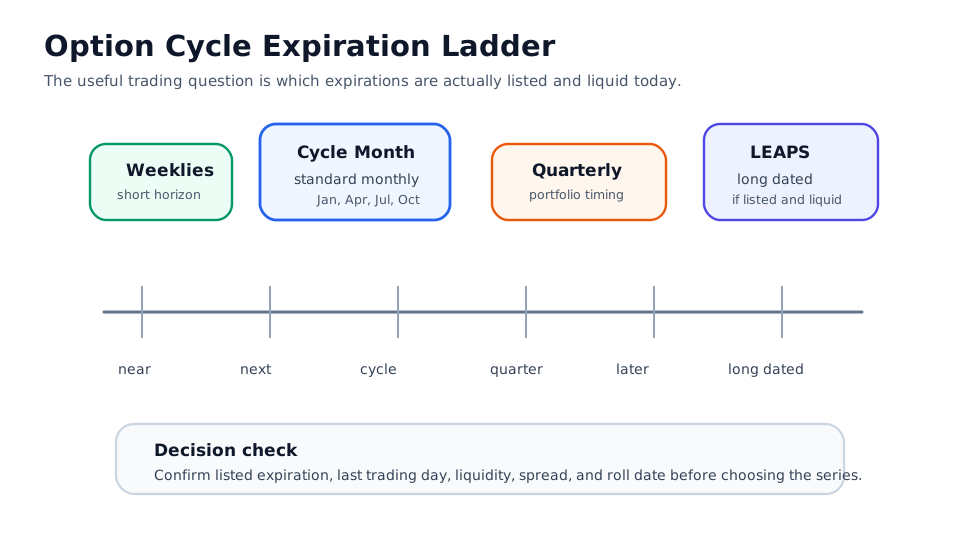
Traditional monthly option cycles are often described as:
| Cycle | Months commonly associated with the cycle |
|---|---|
| January cycle | January, April, July, October |
| February cycle | February, May, August, November |
| March cycle | March, June, September, December |
That table is a starting point, not a live trading rule. Highly active underlyings can have many additional expirations, while less active underlyings may have fewer listed contracts.
Why It Matters
Option cycles affect which maturities are available for hedging, speculation, rolling, and spread construction. A trader who wants one-month exposure, quarterly exposure, or long-dated protection needs to know whether the desired expiration exists and whether it has enough liquidity.
Cycle choice affects:
- how much time remains before expiration
- whether liquidity is concentrated in standard monthly contracts or shorter-dated contracts
- whether a hedge can be rolled into the next usable expiration
- how much time value is embedded in the premium
- whether the contract lines up with earnings, policy meetings, futures delivery periods, or portfolio rebalancing dates
The cycle is useful only when it changes the available contracts, not when it is treated as a label separate from the option chain.
Option Cycle Versus Expiration Date
| Term | Meaning | What to verify |
|---|---|---|
| Option cycle | The schedule or pattern of listed expiration months | Which maturities are listed for the option class |
| Expiration date | The date one specific option expires | Last trading day, exercise deadline, settlement style |
| Option series | One specific contract line with a defined type, strike, and expiration | Symbol, strike, call/put type, bid-ask spread, open interest |
The cycle helps explain availability. The expiration date and series define the actual contract being traded.
Worked Example
Assume an investor wants three to four months of downside protection on a stock position. If the option chain has only near-month and next-month contracts in the liquid strikes, the investor may need to choose a shorter hedge, use a less liquid later-month contract, or use a different hedging instrument.
The option cycle therefore changes the implementation. The investor’s directional view may be unchanged, but the available contract months affect premium, liquidity, roll timing, and hedge reliability.
Authority Sources
Use public sources to verify the listed-options framework:
- OCC Characteristics and Risks of Standardized Options is the core disclosure source for standardized listed option mechanics and risks.
- OCC weekly and quarterly options reports help show how nonstandard expirations are listed and processed.
- Cboe U.S. options hours and holidays provides exchange calendar context that can affect listed expirations and trading days.
For a live trade, use the option chain, exchange product page, broker contract details, and OCC calendar rather than relying on a static cycle table.
Related Terms
- Option Series: A specific call or put with the same underlying, expiration, strike, and type.
- Expiration Date of Options: The date when option rights end or settlement is determined.
- Last Trading Day: The final day a contract can normally be traded.
- Strike Price: The fixed exercise price in an option series.
- Call Option: A right to buy the underlying at the strike.
- Put Option: A right to sell the underlying at the strike.
Review Checklist
- Confirm which expirations are listed for the underlying today.
- Separate standard monthly expirations from weekly, quarterly, end-of-month, and long-dated contracts.
- Check liquidity and open interest in the target expiration, not just the target strike.
- Verify last trading day, exercise deadline, and settlement style before holding near expiration.
- Plan the roll date before opening a hedge that depends on repeated contract replacement.