Option Writer Strategies
Strategies that sell option premium while managing assignment, volatility, margin, and payoff risk.
Option writer strategies sell option contracts and receive premium in exchange for taking an obligation. If the buyer exercises, the writer must perform under the contract terms.
Writing options can be conservative, speculative, or highly leveraged depending on whether the position is covered, cash-secured, spread-defined, or naked.
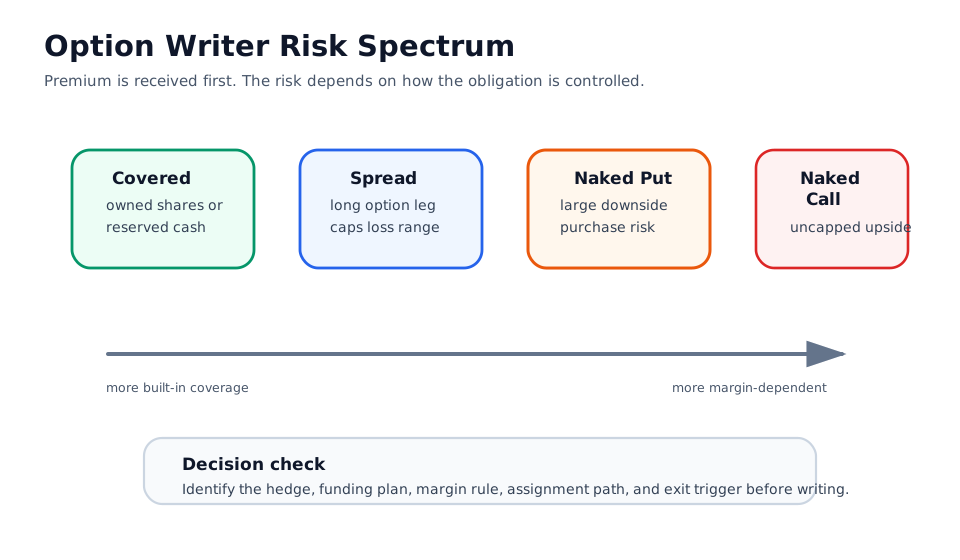
The diagram shows the main control question: what, if anything, limits the writer’s obligation after premium is received?
Core Idea
An option buyer pays for a right. An option writer receives premium for accepting an obligation.
That tradeoff means the writer often benefits from time decay, but can be hurt by:
- large underlying-price moves
- rising implied volatility
- assignment or early exercise
- widening bid-ask spreads
- margin increases
- poor position sizing
Common Writer Structures
| Structure | What is sold | Risk control | Main concern |
|---|---|---|---|
| Covered call | Call against owned shares | Underlying shares cover delivery | Shares may be called away and downside stock risk remains |
| Cash-secured put | Put with cash reserved for assignment | Cash plan for purchase | Stock can fall below effective purchase price |
| Credit spread | Short option plus long option farther out of the money | Long leg caps maximum loss | Spread width, execution cost, and assignment handling |
| Naked call | Call without owning the underlying | None built into the position | Theoretically unlimited upside loss |
| Naked put | Put without a full hedge or cash-secured plan | Margin capacity rather than full funding | Large downside loss and forced purchase risk |
The same word, “writing,” can describe very different risk profiles. The hedge and funding plan matter more than the label.
Premium Income Is Not Free Yield
Option writers can earn many small premiums when markets are calm. The danger is that one stressed move can erase many prior credits. This is why option-writing analysis should always connect premium received with maximum loss, breakeven, margin, and liquidity.
Time decay may help a writer, but time decay does not protect against a jump through the strike.
What To Check Before Writing Options
Before selling option premium, verify:
- contract type, strike, expiration, exercise style, and settlement
- premium received after bid-ask spread and commissions
- maximum loss or stress loss under realistic price gaps
- implied volatility level and event calendar
- margin requirement and account buying-power impact
- assignment handling and broker exercise cutoffs
- exit rule if the trade moves against the thesis
Public Source Checks
- The OCC Characteristics and Risks of Standardized Options explains option-writer obligations, contract terms, exercise, assignment, and risks.
- FINRA’s options overview explains that sellers of options accept obligations if buyers exercise.
- FINRA’s assignment overview gives practical context for short-option assignment.
- The SEC’s Investor Bulletin on options introduces option market participants, including sellers of calls and puts.
Related Terms
- Naked Option: An uncovered written option.
- Naked Call Options Strategy: A short call without owning the underlying.
- Naked Put: A short put without a full hedge or cash-secured plan.
- Covered Call: A call-writing strategy backed by owned shares.
- Spread Strategy: A multi-leg option strategy that can define risk.
- Implied Volatility: A key driver of premium and close-out cost.