Spread Strategy
An options spread strategy combines long and short options to shape payoff, cost, risk, and breakeven levels.
A spread strategy is an options position built from two or more option legs on the same underlying asset. The legs usually differ by strike price, expiration date, or both.
The purpose is to shape the payoff. A spread can reduce premium outlay, define maximum loss, cap maximum gain, isolate a volatility view, or express a directional view with less open-ended exposure than a naked option.
How It Works
Most spreads combine:
- one option that is bought
- one option that is sold
- the same underlying asset
- a planned relationship between strike, expiration, premium, and risk
The long leg gives the trader a right. The short leg creates an obligation. Together, the legs create a payoff that can be more controlled than a single long call, long put, short call, or short put.
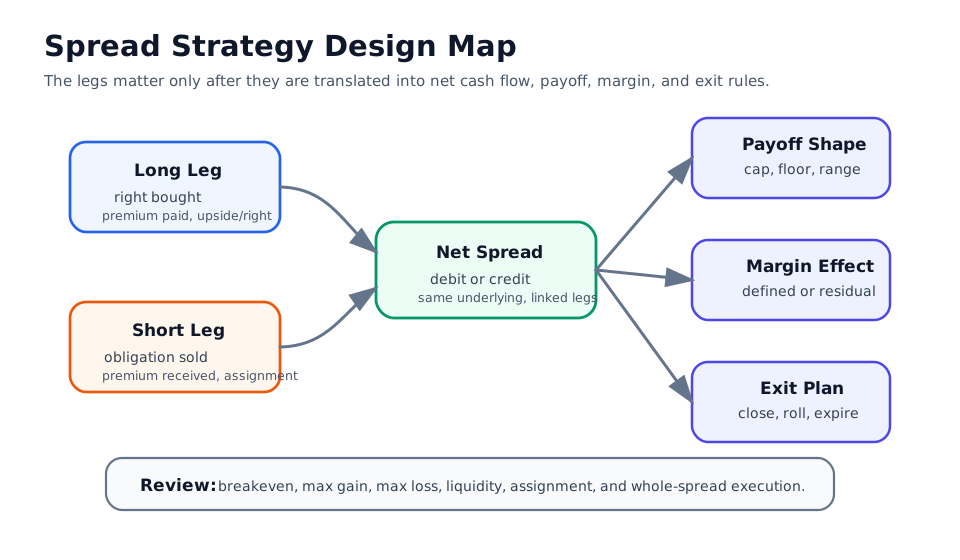
The diagram shows the basic design problem: a spread is not just “two options.” It is a linked payoff, cash-flow, margin, and exit decision.
Main Spread Families
| Spread family | What changes | Typical use | Main risk question |
|---|---|---|---|
| Vertical spread | Strike prices differ, expiration is the same | Directional trade with capped risk and capped reward | Is the expected move large enough to overcome net premium and costs? |
| Calendar spread | Expirations differ, strike is often the same | Time-decay or volatility-term-structure view | Does near-term decay behave as expected before the later option loses value? |
| Diagonal spread | Both strike and expiration differ | Directional view plus time-structure view | Are strike distance, timing, and volatility all aligned? |
| Credit spread | Net premium is received at entry | Income or probability-based trade | Is the credit large enough for the maximum loss and assignment risk? |
| Debit spread | Net premium is paid at entry | Defined-risk directional trade | Is the profit cap acceptable for the lower cost? |
Debit vs. Credit Framing
The debit or credit label tells the trader how cash moves at entry, not whether the trade is attractive.
- A debit spread starts with a net premium paid. Maximum loss is usually the debit paid.
- A credit spread starts with a net premium received. Maximum loss is usually spread width minus credit.
- Both still depend on strike selection, expiration, volatility, liquidity, and execution quality.
The label is a starting point. The real analysis is the payoff, breakeven, maximum loss, maximum gain, and probability distribution implied by option prices.
Public Source Checks
Use primary or regulatory sources before treating any options spread as routine.
- The OCC Characteristics and Risks of Standardized Options explains standardized option contract mechanics, rights, obligations, exercise, assignment, and risks.
- FINRA’s options overview explains approval, exercise, assignment, and why options are not suitable for every investor.
- The Investor.gov introduction to options explains option premiums, calls, puts, and basic risk concepts.
- For a real spread, verify each leg’s quote, bid-ask spread, open interest, expiration, exercise style, contract multiplier, margin treatment, and corporate-action adjustments through the broker or exchange data source used for execution.
Risk Controls
Before using a spread strategy, define:
- the market view: direction, range, volatility, or timing
- each leg, including strike, expiration, premium, and buy/sell direction
- maximum gain, maximum loss, and breakeven levels
- expected assignment, exercise, and margin treatment
- whether the trade should be closed, rolled, exercised, or left to expiration
- liquidity limits for the whole spread, not just the most active leg
Related Terms
- Bull Spread: A directional spread designed for a moderate price rise.
- Box Spread: A four-leg spread often analyzed for synthetic financing or arbitrage.
- Straddle: A volatility strategy using a call and put at the same strike.
- Strangle Options Strategy: A volatility strategy using out-of-the-money call and put strikes.
- Iron Condor: A defined-risk range strategy built from a call spread and put spread.
Review Checklist
Before relying on a spread-strategy analysis, document:
- underlying, expiration, strikes, option style, and contract multiplier
- each long and short leg, including premium and intended order type
- net debit or credit, maximum gain, maximum loss, and breakevens
- implied volatility context and event dates during the holding period
- liquidity, open interest, bid-ask spread, and multi-leg execution plan
- assignment, exercise, margin, and settlement treatment
- exit, roll, or adjustment rule before expiration