Strangle Options Strategy
A strangle uses out-of-the-money calls and puts to trade for or against a large move in the underlying.
A long strangle combines an out-of-the-money call and an out-of-the-money put with the same expiration date but different strike prices.
Like a long straddle, it is a volatility trade. Unlike a straddle, it usually costs less because both options start out of the money.
Payoff at Expiration
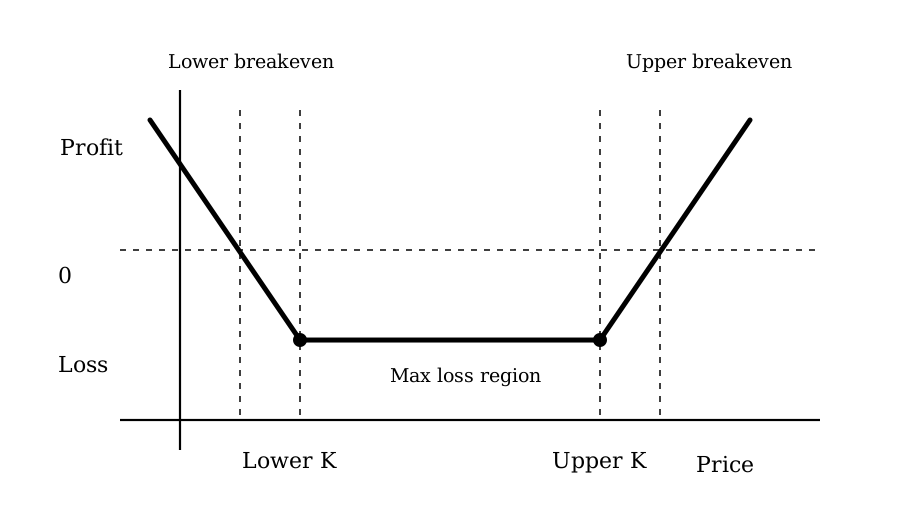
The position loses the total premium if the underlying finishes between the two strikes. It becomes profitable only if the move is large enough beyond one side of the range.
Why Traders Choose It
Traders often choose a strangle when they expect a large move but want a cheaper entry cost than a straddle.
Main Tradeoff
The lower premium comes at a price: the underlying has to move farther before the trade reaches breakeven.
Payoff and Breakevens
For a long strangle at expiration:
- total premium paid = call premium + put premium
- upper breakeven = call strike + total premium paid
- lower breakeven = put strike - total premium paid
- maximum loss = total premium paid, usually when the underlying finishes between the two strikes
- profit begins only after the underlying moves beyond one of the breakevens
The wide flat loss zone is the defining tradeoff. A strangle costs less than a comparable straddle, but it needs a larger realized move to overcome the premium.
Strangle vs. Straddle
A straddle uses the same strike for the call and put. A strangle moves both strikes out of the money to reduce premium, which also pushes breakevens farther away.
| Feature | Long strangle | Long straddle |
|---|---|---|
| Strike setup | Out-of-the-money call and put | Same-strike call and put |
| Premium | Usually lower | Usually higher |
| Breakevens | Wider | Narrower |
| Best fit | Trader wants cheaper convexity and expects a large move | Trader expects a large move but wants closer-to-the-money exposure |
| Main risk | Move is real but not large enough | Premium and volatility crush overwhelm the move |
Public Source Checks
Use primary or regulatory sources before treating any options strategy as executable.
- The OCC Characteristics and Risks of Standardized Options explains standardized option contract mechanics and risks.
- FINRA’s options overview explains approval, exercise, assignment, and risk considerations for investors.
- The Investor.gov introduction to options is a plain-language SEC investor bulletin on option basics and risks.
- For a live trade, verify strike availability, bid-ask spreads, open interest, expiration, contract multiplier, deliverable, and corporate-action adjustments through the broker or exchange data source used for execution.
Worked Example
Suppose a stock trades at $100.
A trader buys:
- a
$105call for$3 - a
$95put for$2
The total premium is $5. The upper breakeven is $110 and the lower breakeven is $90. If the stock finishes between $95 and $105, both options expire out of the money and the trader loses the full $5 premium.
Risk Controls
Before entering a strangle, define:
- maximum premium at risk
- target move or volatility thesis
- acceptable bid-ask spread and liquidity threshold
- event timing and planned holding period
- whether the trade will be closed before expiration
- exit rule if implied volatility falls or the underlying stalls inside the strike range
A short strangle is a different trade. It receives premium but can face large losses if the underlying moves sharply beyond either side of the range.
Review Checklist
Before relying on a strangle analysis, document:
- underlying, expiration, call strike, put strike, and option style
- call premium, put premium, total premium, and commissions
- upper and lower breakevens
- implied volatility and expected volatility catalyst
- bid-ask spread, volume, open interest, and execution plan
- maximum loss for a long strangle or margin/assignment risk for a short strangle
- planned exit rule and maximum position size
Quiz
Related Terms
- Call Option: The upside option in a long strangle.
- Put Option: The downside option in a long strangle.
- Option Premium: The amount paid for the call and put.
- Strike Price: The two strike levels that define the strangle’s loss zone.
- Implied Volatility: A key driver of the option premiums.
- Straddle: Similar volatility strategy using the same strike for both options.