Call Option
Option contract giving the buyer the right to purchase an asset at a fixed strike price before expiration.
A call option gives the buyer the right, but not the obligation, to buy an underlying asset at a fixed strike price before or at expiration, depending on the contract terms.
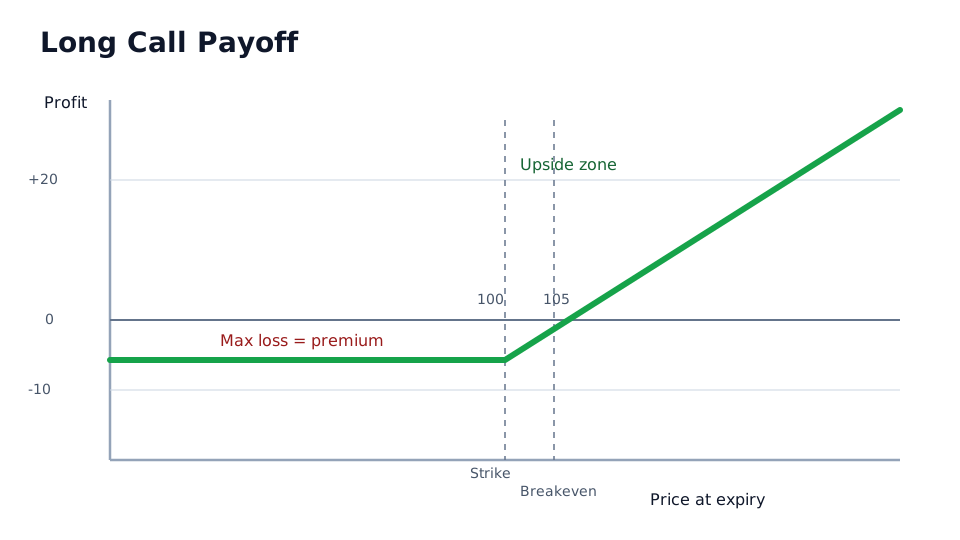
The buyer pays a premium for that right. That premium is the maximum loss for a long call position.
Why a Call Option Matters
Calls matter because they create asymmetric exposure:
loss is capped at the premium paid
upside grows if the asset rises enough
the position can express a bullish view with less cash than buying the asset outright
That combination makes calls useful for both speculation and hedging.
How It Works in Finance Practice
A long call position depends on four core inputs:
expiration
premium
the price of the underlying asset
If the asset finishes above the strike, the option has intrinsic value. If it finishes below the strike, the option expires worthless.
Time and pricing conditions matter too. Even a bullish idea can lose money if:
the move arrives too late
the move is too small
the option was expensive because volatility was already high
Payoff at Expiration
The payoff diagram highlights the key shape of a long call: limited downside, breakeven above the strike, and rising profit once the market moves far enough.
At expiration, payoff before premium is:
Net profit after premium is:
where:
\(S_T\) is the asset price at expiration
\(K\) is the strike price
What Changes a Call’s Value
A call option’s market value can change even when the underlying price does not move much. Important drivers include:
- underlying price relative to the strike
- time remaining until expiration
- implied volatility
- expected dividends or distributions
- interest rates
- bid-ask spread and contract liquidity
- exercise style and settlement terms
The buyer is long optionality. The seller is short optionality and has an obligation if assigned.
Long Call vs. Owning the Asset
| Feature | Long call | Own the asset |
|---|---|---|
| Cash outlay | Premium paid | Full purchase price or margin requirement |
| Maximum loss | Premium paid | Can be much larger, depending on asset price decline |
| Upside | Rises after breakeven | Full upside from current price |
| Time limit | Expires | No option expiration |
| Income rights | Usually no dividends or voting rights | May receive dividends and ownership rights |
Calls can be useful when the trader wants upside exposure with defined premium risk, but the expiration date and premium hurdle make timing critical.
Public Source Checks
Use primary or regulatory sources before treating a call option as simple leveraged stock exposure.
- The OCC Characteristics and Risks of Standardized Options explains standardized option contract mechanics, rights, obligations, exercise, assignment, and risks.
- FINRA’s options overview explains option approval, exercise, assignment, and why options are not appropriate for every investor.
- The Investor.gov introduction to options explains option premiums, calls, puts, and basic option-risk terms.
- For a real trade, verify strike, expiration, exercise style, settlement type, bid-ask spread, volume, open interest, contract multiplier, and corporate-action adjustments.
Risk Controls
Before buying or selling a call, define:
- maximum premium at risk for a long call
- assignment and margin exposure for a short call
- breakeven at expiration
- target price and expected timing of the move
- implied-volatility context at entry
- exit, roll, or exercise plan before expiration
- liquidity threshold for entering and closing the position
Related Terms
- Put Option: The mirror contract that gives the right to sell.
- Strike Price: The fixed exercise price built into the contract.
- Option Premium: The price paid for the call option.
- Implied Volatility: A major driver of option pricing.
- Time Decay: The erosion of option value as expiration approaches.
- Spread Strategy: Combines calls or puts to shape payoff and risk.
Review Checklist
Before relying on a call-option analysis, document:
- underlying, strike, expiration, option style, and contract multiplier
- premium, bid-ask spread, volume, open interest, and execution plan
- breakeven, maximum loss, and expected payoff range
- implied volatility and expected volatility change
- dividend, corporate-action, assignment, and exercise considerations
- margin and risk treatment if the call is sold
- exit, roll, exercise, or expiration plan