Put-Call Ratio
The put-call ratio compares put option activity with call option activity as an options-market sentiment indicator.
The put-call ratio compares put option activity with call option activity. It is often used as a market sentiment indicator because puts are commonly associated with downside protection or bearish positioning, while calls are commonly associated with upside exposure.
The basic volume ratio is:
If 100 puts and 50 calls trade, the ratio is:
That means put volume was twice call volume for the measured universe and period.
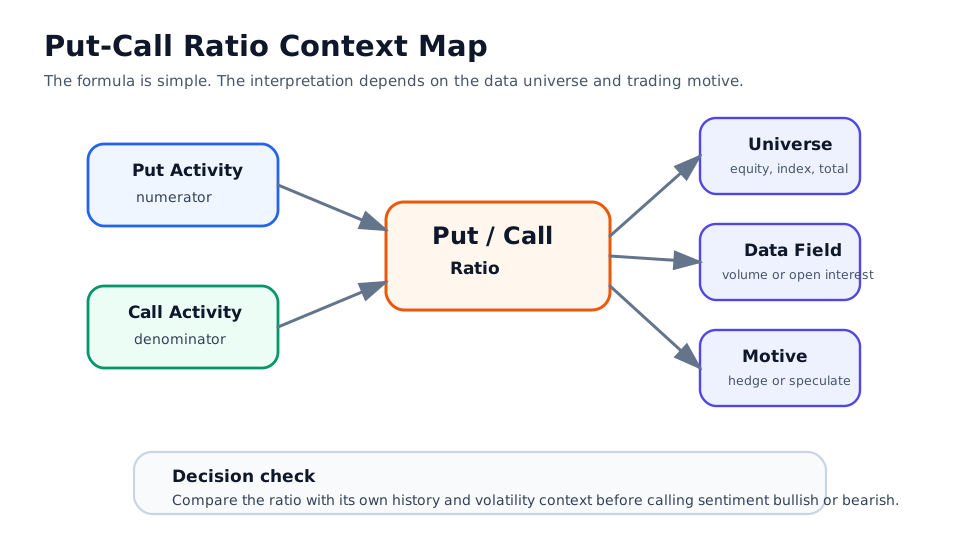
The diagram highlights the main analysis trap: the ratio is simple, but the interpretation changes with the option universe, the data field, and whether activity is hedging or speculation.
How To Interpret It
| Ratio behavior | Common interpretation | Important caution |
|---|---|---|
Above 1.0 | More put volume than call volume | Could be hedging, not outright bearish speculation |
Below 1.0 | More call volume than put volume | Could be covered-call activity, not pure bullishness |
| Rising ratio | More put activity relative to calls | May reflect fear, hedging, or institutional protection |
| Falling ratio | More call activity relative to puts | May reflect optimism, speculation, or yield strategies |
There is no universal bullish or bearish threshold. The ratio must be compared with its own history, the market segment being measured, and the surrounding volatility regime.
Equity, Index, Volume, And Open Interest Versions
Put-call ratios can be calculated several ways:
- Equity put-call ratio: uses options on individual stocks or ETFs.
- Index put-call ratio: uses index options, which are often used for portfolio hedging.
- Total put-call ratio: combines multiple option categories.
- Volume-based ratio: uses today’s traded contracts.
- Open-interest ratio: uses outstanding contracts at a point in time.
These versions can tell different stories. Index put activity may reflect institutional hedging, while single-stock call activity may reflect retail speculation or covered-call strategies.
Worked Example
Assume the equity put-call ratio is low because call volume surges in a handful of speculative stocks. At the same time, the index put-call ratio rises because institutions are buying broad-market protection.
Calling the whole market “bullish” or “bearish” from one ratio would be too crude. A better review separates the data source, option universe, time window, and whether activity is opening, closing, hedging, or speculative.
Authority Sources
Use public sources to verify the data source and market context:
- Cboe historical options data includes Cboe volume and put/call ratio data with source notes and limitations.
- FINRA’s options overview provides the basic options framework for puts, calls, premiums, and risk.
- OCC Characteristics and Risks of Standardized Options is the core listed-options disclosure source.
For analysis, record the vendor, universe, calculation method, timestamp, and whether the ratio uses volume or open interest.
Related Terms
- Put Option: The put activity in the numerator of the ratio.
- Call Option: The call activity in the denominator of the ratio.
- Implied Volatility: Sentiment shifts can coincide with changes in implied volatility.
- Volatility: Put-call ratio readings often mean more when paired with volatility conditions.
- Option Value: Option value can change as sentiment and volatility change.
- Protective Put Strategy: A common reason put demand can rise without implying outright bearish speculation.
Review Checklist
- Identify whether the ratio is equity, index, total, volume-based, or open-interest-based.
- Compare the ratio with its own history, not with a generic threshold.
- Check whether the move is broad-based or concentrated in a few underlyings.
- Review implied volatility and market direction alongside the ratio.
- Avoid using the ratio as a standalone entry or exit trigger.