Option Series
An option series is a specific listed option contract line with the same underlying, type, expiration, strike price, and settlement terms.
An option series is a specific listed option contract line. It identifies contracts that share the same underlying asset, option type, strike price, expiration date, and other contract terms.
In practical terms, an option series is one row in an option chain. The broader option class might be all options on a stock or index, while the series is the exact call or put a trader can buy, sell, close, exercise, or be assigned on.
The series is where the trade becomes specific. Changing the strike, expiration, option type, multiplier, or deliverable creates a different contract line with different risk.
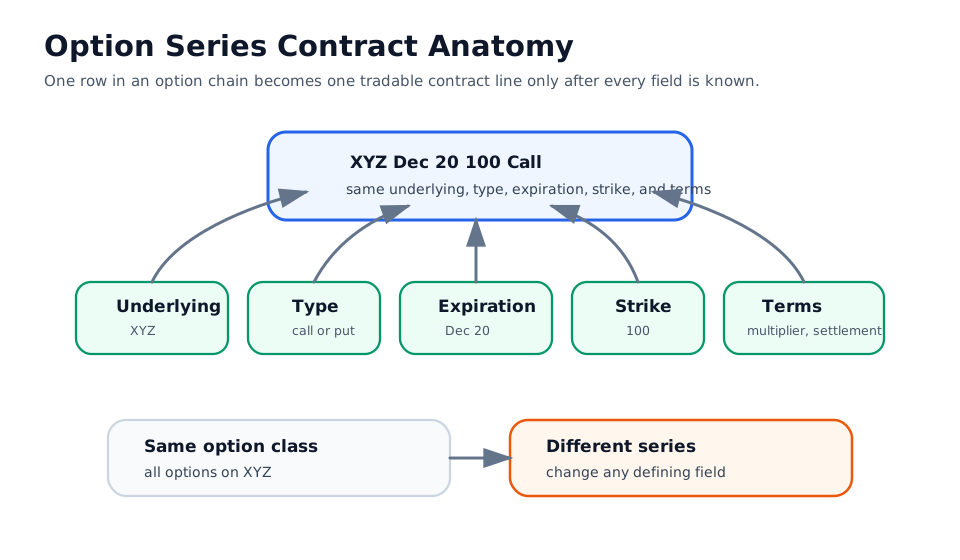
What Defines A Series
An option series is usually defined by:
- the underlying asset or index
- whether the contract is a call or put
- the expiration date
- the strike price
- the contract multiplier
- the settlement style and exercise style
- any adjusted deliverable after corporate actions
Example: a December $100 call on a stock is not the same series as a December $105 call, a January $100 call, or a December $100 put. Each has a different payoff, price, liquidity profile, and risk.
Option Class Versus Option Series
| Term | Scope | Example |
|---|---|---|
| Option class | All options on the same underlying, usually grouped by product | All listed options on XYZ stock |
| Option series | A specific contract line inside the class | XYZ December $100 call |
| Option chain | The table showing many available series | All listed XYZ calls and puts across strikes and expirations |
This distinction matters because most trade decisions are made at the series level, not at the class level.
Why It Matters
Choosing the wrong option series can change the entire trade. A different strike changes moneyness and payoff. A different expiration changes time decay and event exposure. A different settlement or deliverable can change assignment, tax, or operational handling.
Series selection affects:
- premium and bid-ask spread
- probability of finishing in the money
- delta, gamma, theta, and vega exposure
- exercise and assignment risk
- liquidity and open interest
- whether the contract is standard or adjusted
For audit, risk, and reconciliation work, the exact series identifier matters more than a plain-language strategy label.
Worked Example
Assume a trader says they bought an XYZ $100 call. That is incomplete. A risk review needs the expiration date, option root, multiplier, premium, settlement terms, and whether the deliverable is still standard.
The December $100 call and the January $100 call can respond very differently to the same stock move because the January series has more time value. If a corporate action adjusts the deliverable, even the same strike and expiration can require separate treatment.
Authority Sources
Use public sources to check standardized option terms:
- OCC Characteristics and Risks of Standardized Options explains standardized option characteristics, risks, exercise, assignment, and adjustments.
- OCC weekly and quarterly options reports show how weekly and quarterly series are added or delisted.
- FINRA’s options overview explains option rights, premiums, expiration, and the importance of contract terms.
For live trading or reconciliation, use the broker confirmation, OCC memo if the deliverable changed, exchange product details, and the current option chain.
Related Terms
- Option Cycle: The listing schedule that affects available expirations.
- Option Chain: A table of available option series for an underlying.
- Strike Price: The exercise price that distinguishes one series from another.
- Expiration Date of Options: The expiration date attached to a specific series.
- Option Premium and Value: The traded market price of the series.
Review Checklist
- Confirm the option root, underlying, call/put type, strike, expiration, multiplier, and premium.
- Check whether the series is standard, weekly, quarterly, LEAPS, or adjusted.
- Compare bid-ask spread, volume, and open interest before trading.
- Verify whether the deliverable or settlement terms changed because of a corporate action.
- Use the exact series identifier in risk reports, trade tickets, and reconciliation notes.