Delivery Options
Embedded flexibility in futures or deliverable contracts over delivery timing, eligible instrument, location, quality, or quantity.
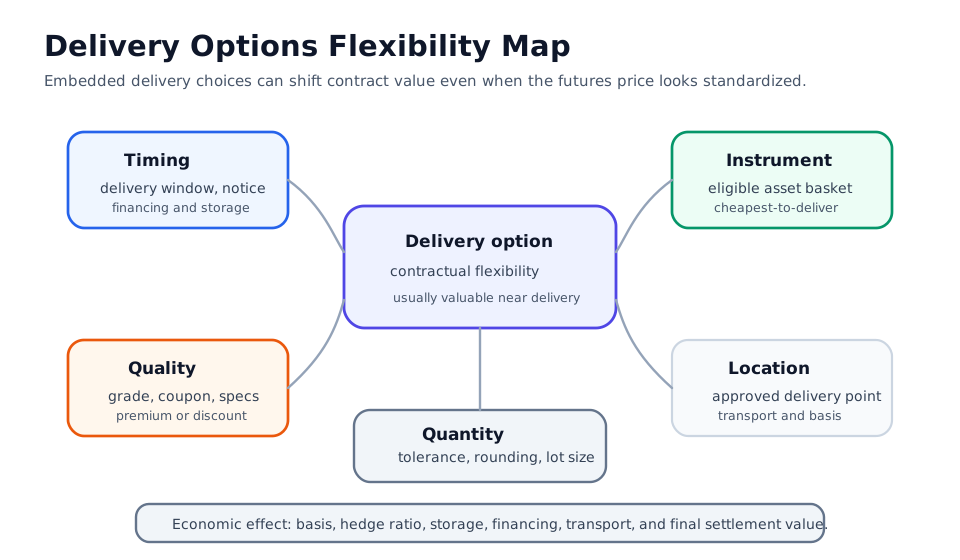
Delivery options are embedded choices in a futures, forward, or deliverable contract that let one party choose how delivery is made. The choice may involve timing, location, quality, quantity, or which eligible instrument is delivered.
This is not the same as an exchange-traded call or put option. In this context, “option” means contractual flexibility inside the delivery process.
Why Delivery Options Matter
Delivery options can affect futures pricing, hedging accuracy, basis risk, and the value of the short position near expiration.
They matter most when the delivered asset is not a single perfectly standardized item. Treasury futures, energy contracts, metals contracts, agricultural futures, and some forward contracts can all involve delivery terms that change economics.
Common Types
| Type | What can vary | Finance impact |
|---|---|---|
| Timing option | When delivery occurs inside a window | Affects financing, storage, and price exposure |
| Quality option | Which grade or quality is delivered | Creates discount, premium, or basis effects |
| Location option | Which approved location is used | Affects transport cost and local supply-demand value |
| Instrument option | Which eligible security or asset is delivered | Creates cheapest-to-deliver analysis |
| Quantity tolerance | Small variation in delivered amount | Affects settlement and inventory planning |
Treasury Futures Example
In Treasury futures, the short can choose from a basket of eligible Treasury securities that satisfy contract rules. The short will usually evaluate which eligible security is cheapest to deliver after conversion factors, repo financing, and market prices.
That delivery choice has economic value. It can affect the futures basis and the hedge ratio used by bond desks.
Commodity Example
In a physical commodity futures contract, delivery rules may specify approved grades, locations, and delivery windows. A trader who ignores those rules may think they hedged one exposure while actually holding a different basis or logistics exposure.
Public Source Checks
- CME Group’s Treasury delivery-process education explains how Treasury futures delivery works and why the short’s delivery choice matters.
- The CME Group Treasury futures and options page provides product context for Treasury futures, options, and deliverable instruments.
- For a specific futures contract, the controlling source is the exchange rulebook and product specification, not a generic definition.
Related Terms
- Futures Contract: The contract type where delivery options often matter.
- Options on Futures: Options whose exercise can create a futures position.
- Forward Contract: A customized deliverable contract that may include negotiated delivery flexibility.
- OTC Options: Customized derivative contracts where delivery and settlement terms can be negotiated.
- Derivative: The broader financial-instrument family.