Straddle
Options strategy that profits from a large move in either direction when volatility matters more than direction.
A straddle is an options strategy that combines a call and a put on the same underlying asset, with the same strike price and expiration date. The most common default meaning is a long straddle, where the trader buys both options.
Why It Matters
A straddle matters because it lets a trader express a view on movement rather than direction.
It is commonly used when the trader believes:
volatility may be high
a major event is coming
the market may move sharply but the direction is uncertain
How It Works in Finance Practice
In a long straddle, the trader buys:
a call option
a put option
Both contracts share the same strike and expiration. The total cost is the sum of the two premiums.
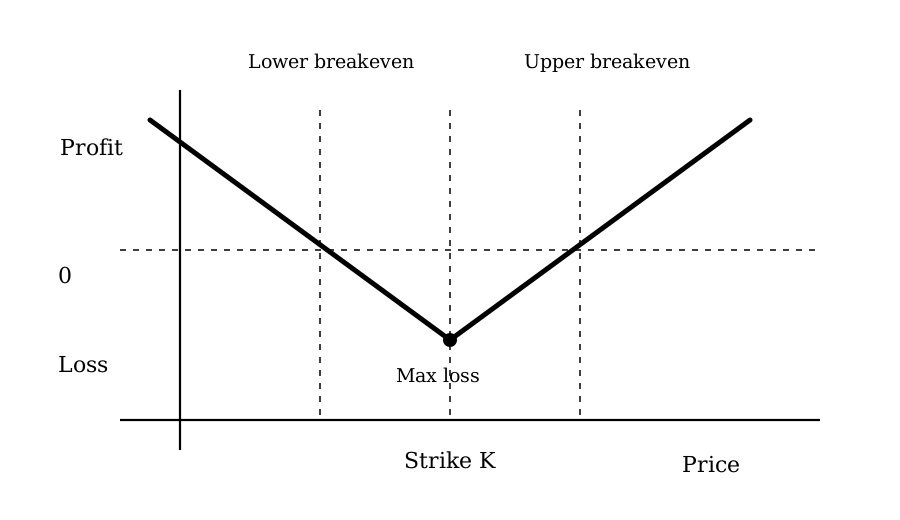
At expiration, the position needs a large enough move away from the strike to overcome both premiums paid.
Long straddles are often discussed alongside implied volatility, because buying two options can be expensive when the market already expects a large move.
Payoff and Breakevens
For a long straddle at expiration:
- total premium paid = call premium + put premium
- upper breakeven = strike price + total premium paid
- lower breakeven = strike price - total premium paid
- maximum loss = total premium paid, usually when the underlying finishes at the strike
- upside profit potential is open-ended; downside profit potential is limited by the underlying price reaching zero
The trade is not simply a bet that “something will happen.” It is a bet that the move, timing, and volatility outcome will be large enough to overcome the combined premium, bid-ask spread, and time decay.
Straddle vs. Strangle
A Strangle Options Strategy uses different strike prices and is usually cheaper, but the underlying must move farther before the position reaches breakeven.
| Strategy | Strike setup | Typical premium | Move needed to profit | Main use |
|---|---|---|---|---|
| Long straddle | Same call and put strike | Higher | Smaller move than a strangle, all else equal | Strong move expected, direction uncertain |
| Long strangle | Out-of-the-money call and put | Lower | Larger move needed | Cheaper volatility exposure |
| Short straddle | Same call and put strike, both sold | Premium received | Benefits from limited movement | Income/volatility-selling strategy with large risk |
Public Source Checks
Use primary or regulatory sources before treating any options strategy as executable.
- The OCC Characteristics and Risks of Standardized Options explains standardized option contract mechanics and risks.
- FINRA’s options overview explains approval, exercise, assignment, and risk considerations for investors.
- The Investor.gov introduction to options is a plain-language SEC investor bulletin on option basics and risks.
- For a real trade, verify the option chain, bid-ask spread, open interest, expiration calendar, deliverable, and corporate-action adjustments through the broker or exchange data source used for execution.
Risk Controls
Before entering a long straddle, define:
- maximum premium at risk
- target move or volatility thesis
- whether the trade is meant to be held through expiration or closed before an event
- acceptable bid-ask spread and liquidity threshold
- expected implied-volatility change after the event
- exit rule if the underlying moves but the option value does not respond enough
A short straddle is a different risk profile. It collects premium but can face very large losses if the underlying moves sharply, so margin, assignment, and stop discipline matter much more.
Quiz
When Straddles Mislead
Straddles can mislead when:
- the trader focuses on direction instead of required move size
- implied volatility is already pricing the expected event
- post-event volatility crush offsets part of the price move
- bid-ask spreads consume too much expected edge
- the expiration is too short for the thesis to develop
- the trader ignores early assignment, dividend, or settlement details
- a short straddle is described as if the only risk is giving back premium
Review Checklist
Before relying on a straddle analysis, document:
- underlying, expiration, strike, contract multiplier, and option style
- call premium, put premium, total premium, and commissions
- upper and lower breakevens
- implied volatility before trade entry and expected change after the event
- bid-ask spread, volume, open interest, and execution plan
- maximum loss for a long straddle or margin/assignment risk for a short straddle
- exit rule, hedge rule, and maximum position size
Related Terms
- Call Option: One half of the straddle position.
- Put Option: The other half of the straddle position.
- Implied Volatility: Strongly affects whether a straddle is expensive or cheap.
- Option Premium: The combined premium is the trader’s initial cost.
- Strike Price: The price level around which the payoff is centered.
- Strangle Options Strategy: Uses different strikes and usually lower premium with wider breakevens.