Covered Call
A covered call sells call option premium against an owned underlying position, trading some upside for income.
A covered call is an options strategy in which an investor:
- owns the underlying asset, usually 100 shares of stock
- sells a call option against those shares
The premium received creates income, but the investor gives up part of the upside above the option’s strike price.
Why Investors Use Covered Calls
Covered calls are usually used when an investor is:
- modestly bullish
- neutral
- willing to sell the shares at a target price
The attraction is simple: the investor already owns the stock, so they can collect option premium on a position they planned to hold anyway.
How the Strategy Works
Suppose an investor owns 100 shares of a stock at $100 and sells a one-month call with:
- strike price =
$105 - premium received =
$3
At expiration:
- if the stock stays at or below
$105, the call may expire worthless and the investor keeps the premium - if the stock rises above
$105, the shares may be called away at$105
The investor still earns the premium, but no longer participates in upside above the strike.
Payoff Shape
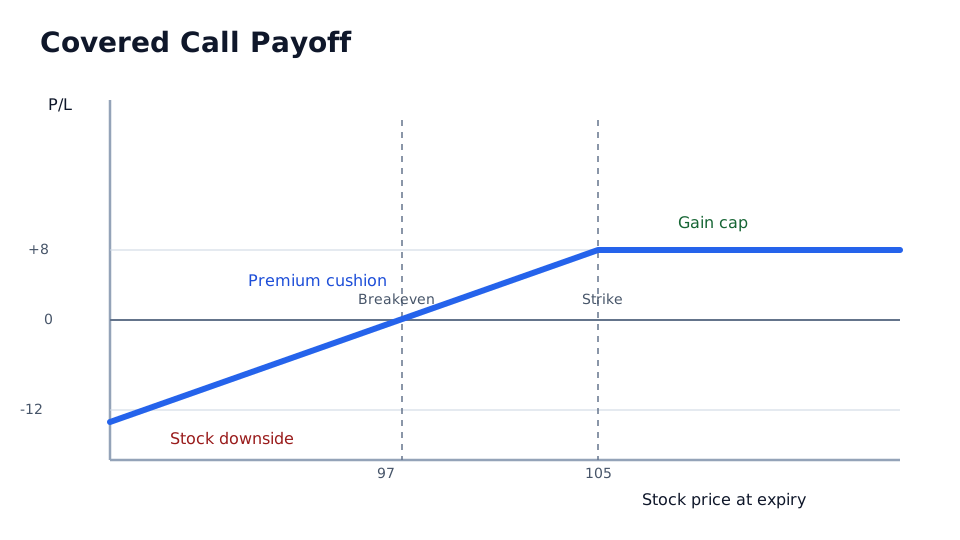
An SVG works better than prose alone here because the key teaching point is geometric: the premium cushions losses slightly, but the upside flattens after the strike.
At expiration, a covered call’s profit can be summarized as:
where:
- \(S_T\) is the stock price at expiration
- \(K\) is the call strike price
- \(S_0\) is the stock purchase price
What the Premium Really Does
The premium helps, but only a little.
In the example above, the investor receives $3 per share. That means the effective breakeven falls from $100 to $97.
But if the stock drops to $80, the investor still suffers a large loss. The premium softens the downside. It does not eliminate it.
This is one of the most common misunderstandings about covered calls.
Main Advantages
- generates income from existing holdings
- lowers breakeven slightly through premium received
- can fit investors who are willing to exit at a chosen price
Main Risks and Tradeoffs
- upside is capped above the strike price
- downside remains substantial because the investor still owns the stock
- the strategy can create tax, assignment, or portfolio-management complications
A covered call is therefore an income strategy, not a magic low-risk strategy.
Payoff Mechanics
At expiration, the key covered call measures are:
- breakeven = stock cost - call premium received
- maximum gain = call strike - stock cost + premium received
- downside exposure = stock loss, reduced only by the premium received
- upside above the strike = usually forgone if the shares are assigned
For the $100 stock, $105 strike, and $3 premium example:
- breakeven is
$97 - maximum gain is
$8per share before commissions and taxes - the investor still loses money below
$97 - gains above
$105generally belong to the call buyer if assignment occurs
The premium is income from selling optionality. It is not downside insurance in the same way as a protective put.
Assignment and Dividend Risk
Covered call sellers should monitor assignment risk, especially when:
- the short call is in the money
- the option has little remaining time value
- the underlying stock has an upcoming ex-dividend date
- the investor would not actually want to sell the shares at the strike
- tax lots or holding periods matter to the portfolio
Assignment is not automatically bad. It may be the planned exit. The mistake is selling a call and later discovering that the strike, dividend timing, or tax impact did not match the investor’s real objective.
Covered Call vs. Protective Put
Covered calls and protective puts are often compared because both start with a stock position, but they change risk in opposite ways.
| Strategy | Option action | Main benefit | Main tradeoff |
|---|---|---|---|
| Covered call | Sell a call against owned shares | Receives premium and can set an exit price | Caps upside and leaves most downside risk |
| Protective put | Buy a put against owned shares | Limits downside below the put strike | Costs premium and reduces net return if protection is not needed |
| Collar | Sell a call and buy a put | Uses call premium to help fund downside protection | Caps upside and defines a price range |
Public Source Checks
Use primary or regulatory sources before treating a covered call as a routine income trade.
- The OCC Characteristics and Risks of Standardized Options explains standardized option contract rights, obligations, exercise, and assignment risk.
- FINRA’s options overview explains investor approval, exercise, assignment, and the obligations of option writers.
- The Investor.gov introduction to options explains option terminology, premiums, calls, puts, and basic risk.
- For a real trade, verify the option chain, bid-ask spread, open interest, expiration date, contract multiplier, dividend calendar, and tax-lot implications before selling the call.
Risk Controls
Before entering a covered call, define:
- whether assignment is acceptable at the strike price
- the minimum premium needed to justify capping upside
- the stock downside loss the investor can tolerate
- the dividend and earnings calendar during the option’s life
- whether the call will be rolled, closed, or left to assignment
- how commissions, bid-ask spreads, and taxes affect the net result
Related Terms
- Call Option: The contract sold in a covered call strategy.
- Strike Price: The price above which upside is typically capped.
- Option Premium: The income received for selling the call.
- Theta: Time decay often works in favor of the option seller.
- Protective Put Strategy: A contrasting stock-and-option strategy that buys downside protection.
- Collar Options Strategy: Combines a covered call with a protective put to define a price range.
Review Checklist
Before relying on a covered call analysis, document:
- share position, cost basis for trade analysis, and tax-lot considerations
- call strike, expiration, premium, contract multiplier, and option style
- breakeven, maximum gain, and downside exposure after premium
- whether assignment is acceptable and whether dividends create early-assignment risk
- bid-ask spread, volume, open interest, and execution plan
- roll, close, or assignment rule before expiration
- portfolio impact if the shares are called away or the stock falls sharply