Fixation
Benchmark or contract process that fixes a reference price for valuation, settlement, hedging, or physical-market transactions.
Fixation is the process of setting a reference price for a commodity, financial instrument, or contract at a defined time or through a defined methodology. In commodity markets, fixation often means the benchmark price used to value a trade, settle a contract, invoice a physical delivery, or convert a floating price into a fixed price.
The term is common in precious metals and physical commodity markets, but the same idea appears anywhere a contract references an official fixing, benchmark, auction, settlement price, or pricing window.
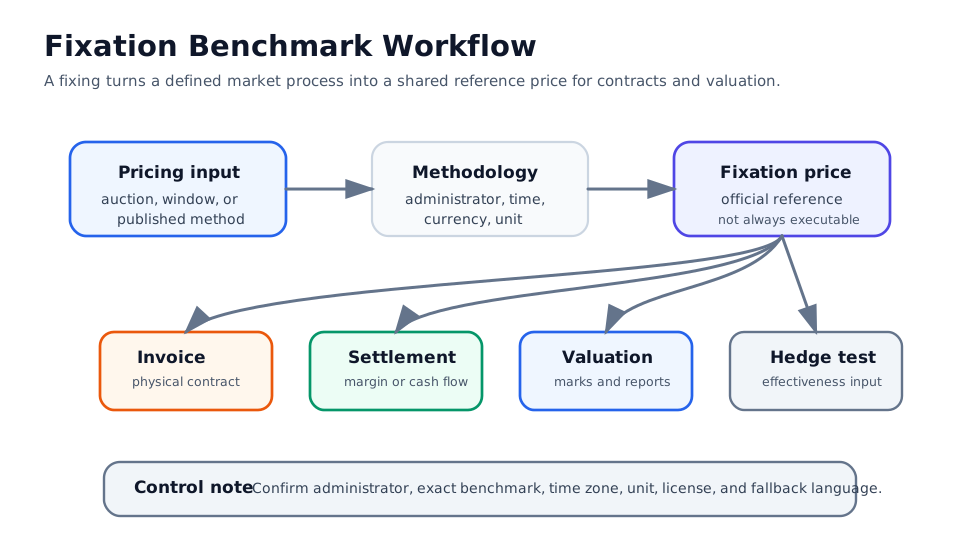
How Fixation Is Used
| Use case | What is fixed |
|---|---|
| Spot transaction | The price for prompt physical delivery. |
| Forward or supply contract | The future invoice price or pricing formula input. |
| Futures settlement | The official settlement value used for margin and contract settlement. |
| Precious-metals benchmark | Auction-based benchmark price used for valuation and transactions. |
| Hedge accounting or valuation | Reference price used to test hedge effectiveness or mark exposure. |
The modern LBMA Gold Price is a useful example. ICE Benchmark Administration describes the LBMA Gold Price as a global benchmark for unallocated gold delivered in London, with electronic auctions at 10:30 and 15:00 London time. See ICE Benchmark Administration’s precious-metals benchmarks page and LBMA’s LBMA Gold Price page.
Fixation Is Not Always Tradable
A published fixation or benchmark may be used for valuation, settlement, or contract reference, but that does not mean every reader can trade unlimited size at that price. Licensing, access, auction participation, timing, bid-ask spread, and local-market adjustments can all matter.
When a fixation affects a finance decision, identify:
- benchmark administrator and methodology
- time of fixing and relevant time zone
- currency, unit, and delivery location
- whether the price is executable, licensed, delayed, or indicative
- whether the contract uses the exact benchmark or a local adjustment
- what happens if the benchmark is unavailable or corrected
Related Terms
- Price Discovery: Market process that helps form reference prices.
- Spot Commodity: Physical-market context where fixation may set transaction price.
- Precious Metals: Commodity group where benchmark fixings are widely referenced.
- Mark to Market: Valuation process that may rely on official settlement or benchmark prices.
- Hedging: Price-risk management that may reference fixings.