Commodity Futures Contract
Standardized exchange-traded contract for future commodity delivery or cash settlement under specified contract terms.
A commodity futures contract is a standardized agreement traded on a futures exchange for a specified commodity, contract size, quality, delivery month, tick value, and settlement method. The buyer is long the contract and the seller is short the contract; both sides are subject to exchange margining and daily mark-to-market settlement.
The key point is standardization. A crude oil, corn, gold, or natural gas futures contract is not just a price quote. It is a defined legal and market instrument with rules for quantity, grade, delivery location, settlement, last trading day, price limits, and margin.
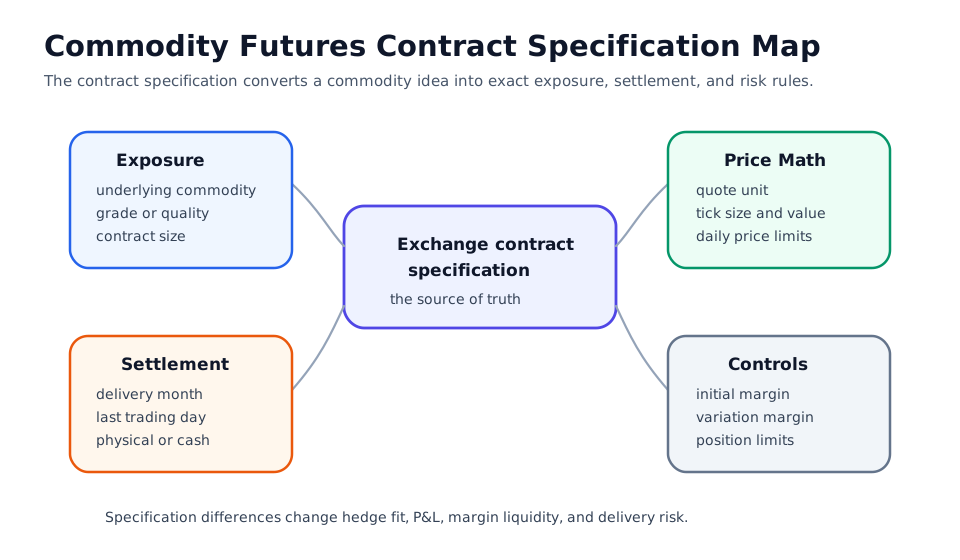
Contract Specification Checklist
| Specification | Why it matters |
|---|---|
| Underlying commodity | Determines the physical or cash-market exposure. |
| Contract size | Converts a price move into dollar profit or loss. |
| Grade or quality | Controls what can be delivered or referenced. |
| Delivery month | Determines expiration, roll timing, and delivery risk. |
| Settlement method | Physical delivery and cash settlement create different operational risks. |
| Tick size and tick value | Sets minimum price movement and per-tick P&L. |
| Margin requirement | Determines collateral and liquidity needs. |
| Daily price limit | Can restrict execution during extreme moves. |
Before using a contract for hedging or trading, compare this checklist with the actual exchange specification. CME Group’s WTI Crude Oil futures contract specification is a useful public example, and the CFTC’s futures basics explains why clearing, margin, and daily mark-to-market matter.
Example
If a futures contract represents 1,000 barrels of crude oil, a $1 per barrel move changes contract value by $1,000. The trader may post only a margin deposit, but the economic exposure is tied to the full contract size. That leverage is useful for hedging and risky for speculation.
Futures Contract Versus Cash Commodity
| Feature | Commodity futures contract | Cash commodity transaction |
|---|---|---|
| Venue | Exchange-traded and cleared. | Negotiated in the physical or spot market. |
| Terms | Standardized. | Often customized by location, quality, timing, and logistics. |
| Margin | Daily variation margin applies. | Payment, credit, and delivery terms vary by contract. |
| Delivery | Governed by exchange rules if held into delivery. | Direct physical delivery or transfer terms. |
| Primary risk | Price, margin, liquidity, basis, and delivery-month risk. | Price, credit, logistics, quality, and settlement risk. |
Related Terms
- Commodity Futures: Market category for commodity futures contracts.
- Future Contract: Broader futures contract concept.
- Forward Contract: Customized OTC alternative.
- Spot Commodity: Cash-market commodity exposure.
- Limit Up, Limit Down: Price-limit rules that can affect commodity futures trading.