Variable Price Limit
Futures price-limit system that can expand, reset, or change based on exchange-defined market conditions.
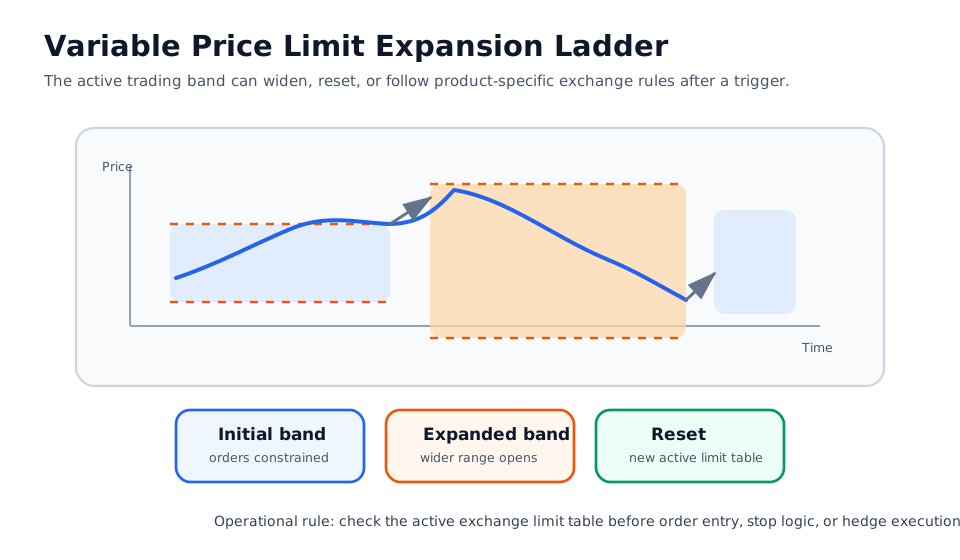
A variable price limit is a futures price-limit system that can change under exchange-defined conditions. Instead of one fixed band for the entire session, the permitted trading range may expand, reset, or follow a schedule after price-limit triggers, volatility events, delivery-month rules, or settlement-window procedures.
Variable limits are used because a single hard limit can preserve order but also block price discovery. Expanding the band can allow the market to search for a clearing price while still using staged controls.
How It Differs From A Fixed Limit
| Feature | Fixed price limit | Variable price limit |
|---|---|---|
| Range | Usually one defined range for the session. | Range can widen, reset, or change under rule triggers. |
| Purpose | Restrict extreme movement. | Balance volatility control with continued price discovery. |
| Operational risk | Market can lock at the limit. | Traders must track changing bands and rule triggers. |
| Evidence source | Contract specs and exchange notices. | Contract specs, current limit updates, rulebook, and intraday notices. |
CME’s price-limits page provides current product-level limit information, and its price-limits/circuit-breakers explainer gives examples of how price-limit tools can differ by product.
Why Traders Care
Variable price limits affect order placement, stop logic, liquidation plans, and hedge execution. A trader who checks only yesterday’s limit may miss an expanded band, a delivery-month exception, or a settlement-window constraint. Risk teams should also understand whether a locked limit prevents valuation from reflecting the likely next executable price.
What To Check
Before trading near a variable price limit:
- current exchange price-limit table or notice
- contract month and delivery status
- whether limits can expand after a halt or settlement condition
- whether orders outside the band will be rejected, held, or canceled
- margin impact if the market reopens at an expanded limit
- related contracts that may continue trading and reveal implied value
Related Terms
- Fluctuation Limit: General daily price-range concept.
- Limit Up, Limit Down: Upper and lower price-boundary condition.
- Limit Down: Downside price-boundary condition.
- Circuit Breaker: Halt or pause mechanism during extreme moves.
- Price Discovery: Process variable limits try to preserve while controlling disorderly trading.