Roll Back Option Strategy
A roll back option strategy moves an options position to an earlier expiration to change time exposure and risk.
A roll back option strategy adjusts an existing options position by closing the current contract and opening a similar position with an earlier expiration date. It is the opposite of rolling forward.
The strategy changes time exposure. It can reduce premium tied up in a longer-dated option, concentrate the trade into a nearer event window, or lock in part of the value of the original position. It also increases dependence on near-term price movement.
How It Works
A roll back usually has two linked trade actions:
- close the existing option or spread
- open a similar option or spread with an earlier expiration
The strike may stay the same or change at the same time. If only the expiration changes, the adjustment mainly changes time value, theta, gamma, and event exposure.
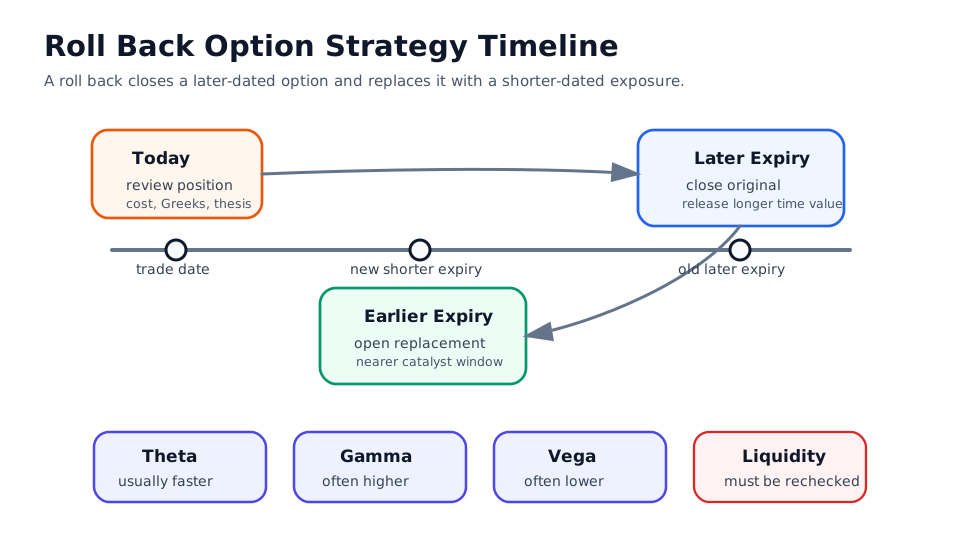
The timeline below shows the core tradeoff. Rolling back shortens the clock, so the position may use less long-dated time value but becomes more dependent on the near-term catalyst.
Roll Back vs. Roll Forward
| Adjustment | Expiration change | Typical reason | Main tradeoff |
|---|---|---|---|
| Roll back | Move to an earlier expiration | Concentrate exposure into a nearer catalyst or reduce longer-dated premium | Less time for the thesis to work |
| Roll forward | Move to a later expiration | Give the thesis more time or avoid near-term expiration risk | More time value and premium exposure |
| Roll up/down | Change strike | Reset moneyness or risk/reward | Changes breakeven and payoff shape |
Rolling is not a neutral bookkeeping step. It changes the economics of the trade.
Worked Example
Suppose a trader owns a three-month call on a stock but now expects the main catalyst to occur within two weeks. The trader may:
- sell the three-month call
- buy a similar call expiring in one month
- keep directional exposure but reduce longer-dated time value
That roll back may free premium or realize gains from the longer-dated option. But it also creates a shorter deadline: if the expected move does not happen quickly, time decay can hurt the new position faster.
What Changes in the Greeks
Rolling back often changes risk in ways that are not obvious from the trade ticket.
| Risk input | Typical effect of rolling back | Why it matters |
|---|---|---|
| Theta | Usually becomes more negative for long options | Less time remains, so time decay can accelerate |
| Gamma | Usually increases near the money | Price sensitivity can change faster as expiration approaches |
| Vega | Usually decreases | Shorter-dated options often respond less to volatility changes in dollar terms |
| Event timing | Becomes more concentrated | The trade now depends more on the near-term catalyst |
The exact result depends on moneyness, volatility, rates, dividends, and whether the position is long or short options.
Public Source Checks
Use primary or regulatory sources before treating a roll as a simple adjustment.
- The OCC Characteristics and Risks of Standardized Options explains standardized option contract mechanics, exercise, assignment, and option-writer obligations.
- FINRA’s options overview explains option approval, exercise, assignment, and why options are not appropriate for every investor.
- The Investor.gov introduction to options explains option premiums, calls, puts, and basic investor risks.
- For a real roll, verify both closing and opening legs, bid-ask spreads, open interest, expiration calendars, contract multiplier, exercise style, and margin impact before entering the order.
Risk Controls
Before rolling back an option position, define:
- why the shorter expiration better matches the thesis
- whether the roll is a debit, credit, or partial profit-taking action
- new breakeven, maximum loss, and maximum gain if applicable
- how the roll changes theta, gamma, and event exposure
- whether liquidity is adequate in the nearer expiration
- whether assignment or early exercise risk changes
- exit rule if the near-term move does not occur
Related Terms
- Spread Strategy: Multi-leg option structures often adjusted by rolling.
- Covered Call: A common strategy where investors may roll calls across expirations.
- Iron Condor: A multi-leg range strategy where rolls can change risk quickly.
- Protective Put Strategy: A hedge where expiration choice should match the risk window.
- Option Premium: The price impact of closing one contract and opening another.
Review Checklist
Before relying on a roll-back analysis, document:
- original contract, new contract, strikes, expirations, and option style
- closing price, opening price, net debit or credit, and commissions
- reason the shorter expiration fits the revised thesis
- new breakeven, maximum loss, maximum gain, and Greeks
- liquidity, bid-ask spread, open interest, and order-entry plan
- assignment, exercise, margin, and tax-lot implications
- exit rule if the catalyst fails or time decay accelerates