Futures Trading
Exchange-traded futures position mechanics, including margin, mark-to-market settlement, hedging, speculation, and contract risk.
Futures trading is buying or selling standardized exchange-traded contracts whose value is tied to an underlying commodity, index, rate, currency, or financial instrument. A futures trade creates leveraged exposure and is typically marked to market daily through a clearing system.
The practical issue is not only whether the trader is bullish or bearish. A futures trade also depends on contract size, tick value, delivery month, settlement method, margin, liquidity, price limits, and how closely the contract matches the exposure being hedged.
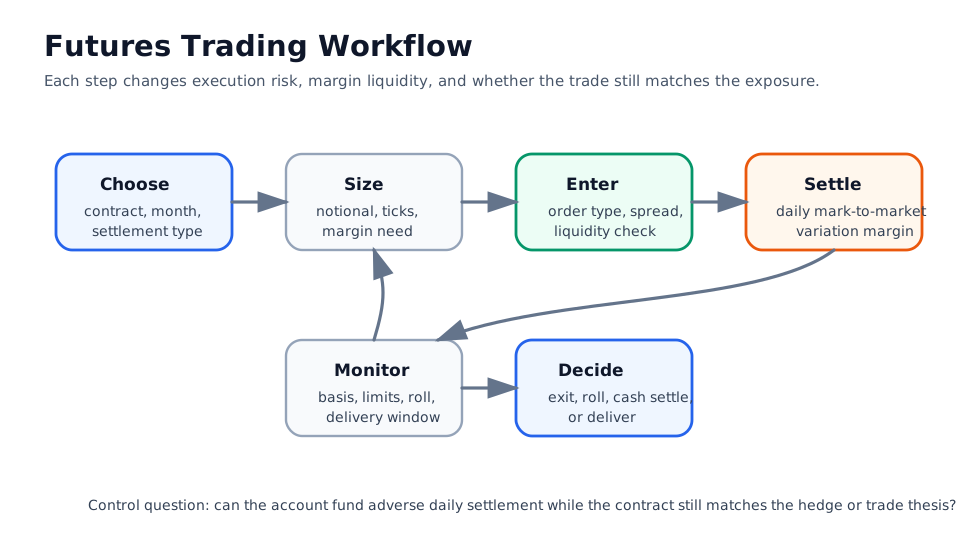
Futures Trading Workflow
| Step | What to check |
|---|---|
| Choose contract | Underlying, exchange, contract size, month, and settlement type. |
| Translate exposure | Dollar value per point, tick value, notional exposure, and margin need. |
| Enter order | Order type, liquidity, spread, and price-limit status. |
| Monitor position | Daily mark-to-market, variation margin, basis, and roll timing. |
| Exit, roll, or deliver | Close the position, move to a later month, cash settle, or enter delivery procedures. |
Hedging Versus Speculation
| Purpose | Example | Main risk |
|---|---|---|
| Hedging | Airline buys fuel-related futures to offset rising input costs. | Hedge mismatch, basis risk, liquidity, and margin calls. |
| Speculation | Trader buys index futures expecting a market rally. | Directional loss, leverage, gap risk, and execution risk. |
| Spread trading | Trader buys one contract month and sells another. | Curve movement, liquidity, and model error. |
| Arbitrage or relative value | Desk compares futures, cash, forwards, and swaps. | Funding, settlement, timing, and operational risk. |
The CFTC’s futures basics page is a useful public starting point for the role of futures markets and the difference between futures and the underlying cash market.
Risk Controls
- Know the contract multiplier before sizing the position.
- Keep margin liquidity available for adverse daily settlement.
- Treat stop orders as execution instructions, not guaranteed loss limits.
- Check price-limit, halt, and delivery-month rules.
- Separate hedge effectiveness from speculative P&L.
- Document whether the trade is an outright, spread, hedge, or roll.
Related Terms
- Commodity Futures: Commodity-specific futures market use.
- Futures Price: Quoted level of a futures contract.
- Outright Futures Position: Single directional futures exposure.
- Margin: Collateral supporting a futures position.
- Limit Up, Limit Down: Price-limit conditions that can restrict execution.