Exchange of Futures for Physical (EFP)
Privately negotiated transaction exchanging a futures position for an equivalent physical or cash-market position.
An Exchange of Futures for Physical (EFP) is a privately negotiated transaction in which counterparties exchange a futures position for an equivalent position in the related physical, cash, or spot market. The futures leg is reported to the exchange under its rules, while the related-position leg is arranged between the parties.
EFPs are part of the broader exchange-for-related-position family. They are common where market participants need to move between futures exposure and cash-market exposure without executing both legs independently in the open order book.
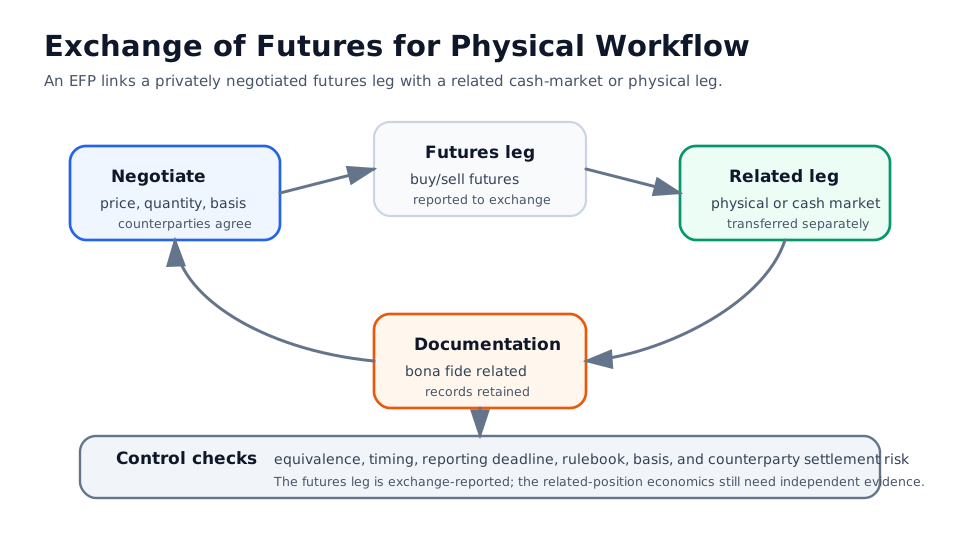
How An EFP Works
| Step | What happens |
|---|---|
| Private negotiation | Two parties agree on the futures leg, related physical or cash-market leg, quantity, basis, and price. |
| Futures transfer | One party buys and the other sells the futures position. |
| Physical or cash-market leg | The parties exchange the related physical commodity, ETF, securities basket, or other qualifying exposure. |
| Exchange reporting | The futures side is reported to the exchange as an EFP or related-position transaction. |
| Documentation | The parties keep records showing bona fide related positions and commercially reasonable terms. |
The details depend on the exchange, product, and rulebook. CME describes EFPs as privately negotiated trades that can exchange a futures position for an equivalent spot-market position or vice versa, and notes that EFPs are governed by exchange rules such as CME Rule 538. See CME’s EFRP overview, equity-index EFP page, and cryptocurrency EFP explainer for examples.
The CFTC futures glossary places EFPs inside the broader exchange-of-derivatives-for-related-position family. That framing is useful because the key test is not the label alone; it is whether the reported futures leg is supported by a bona fide related-position leg under the applicable exchange rules.
Why Traders Use EFPs
EFPs can help commercial and institutional users:
- convert futures exposure into physical or cash-market exposure
- reduce execution risk from trading both legs separately
- manage basis between futures and related physical positions
- shift collateral, margin, financing, or balance-sheet treatment
- handle large positions with negotiated terms and required reporting
An EFP is not a way to avoid exchange rules. The futures leg must be reported, documented, and consistent with the applicable product rules.
EFP Versus Similar Terms
| Term | Distinction |
|---|---|
| EFP | Futures position exchanged for a related physical or cash-market position. |
| EFS | Futures position exchanged for a related swap position. |
| Block trade | Privately negotiated futures/options trade meeting exchange size and reporting rules, without a physical leg. |
| Physical delivery | Delivery process at contract expiration under exchange specifications. |
| Spot transaction | Immediate or prompt physical/cash-market transaction without necessarily involving futures. |
Related Terms
- Commodity Contract: Contract terms behind physical and futures exposure.
- Spot Commodity: Physical-market leg that may be related to an EFP.
- Futures Market: Venue context for the futures leg.
- Basis Risk: Risk that related futures and cash-market exposures do not move together perfectly.
- Regulated Futures Contract: U.S. tax and exchange context for many futures positions.