Barrier Options: Knock-In and Knock-Out
A barrier option activates or terminates when the underlying reaches a specified level during the observation period.
A barrier option activates or terminates when the underlying reaches a specified level during the observation period. A knock-in option begins to exist after the barrier event; a knock-out option terminates after it.
The contract is path-dependent. The final payoff depends not only on where the underlying finishes, but also on whether and when it touched the barrier.
Barrier Mechanics
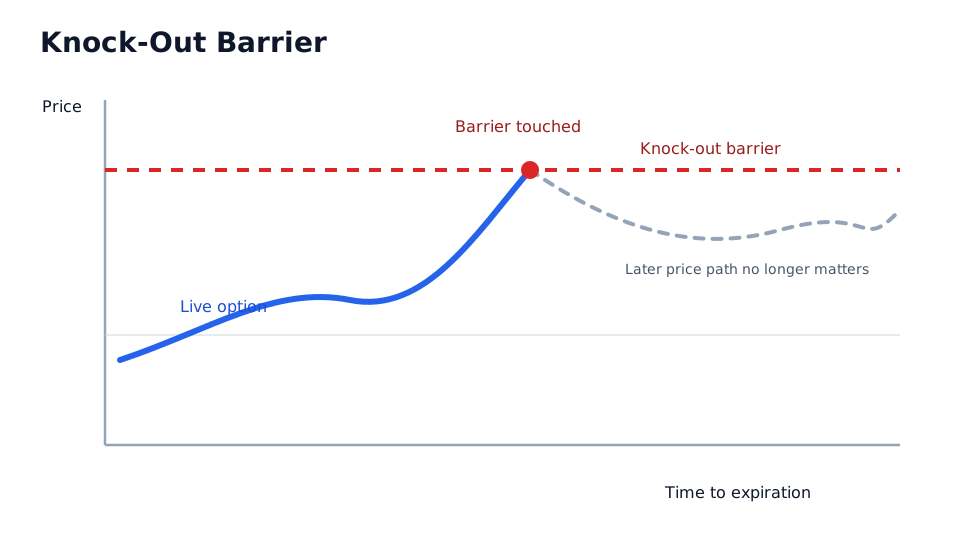
The diagram shows why the barrier matters. The option can disappear before expiration even if the underlying later moves back into a favorable range.
Common structures include:
| Structure | Barrier location | What happens when the barrier is reached |
|---|---|---|
| Up-and-in call | Barrier above the current price | The call activates |
| Down-and-in put | Barrier below the current price | The put activates |
| Up-and-out call | Barrier above the current price | The option terminates if the underlying rises to the barrier |
| Down-and-out put | Barrier below the current price | The option terminates if the underlying falls to the barrier |
| Up-and-out put | Barrier above the current price | The option terminates if an upside barrier is touched |
| Down-and-out call | Barrier below the current price | The option terminates if a downside barrier is touched |
“Up” and “down” identify the barrier’s location relative to the starting price. “In” and “out” identify activation or termination. Some contracts include a rebate; observation can be continuous or limited to stated dates or fixes.
Why It Matters
Knock-out options usually cost less than comparable plain-vanilla options because the buyer gives up protection or upside after the barrier is touched. Knock-in options can also cost less because the right never activates unless the barrier event occurs.
That lower premium is useful only if the barrier risk is acceptable. A trader can be right on the broad direction and still lose the contract because the path briefly touched the barrier.
Example
Suppose a trader buys an up-and-out call on a stock trading at 100:
- strike:
100 - knock-out barrier:
120 - expiration: three months
- rebate: none
If the stock touches 120 before expiration, the option terminates. If the stock later closes at 115, the trader no longer has a live option even though a plain call would have value.
Pricing And Risk Drivers
Important drivers include:
- distance between current price and barrier
- expected volatility and jump risk
- time to expiration
- monitoring frequency and official price source
- rebate amount, if any
- liquidity and whether the contract is OTC
- hedging difficulty near the barrier
Barrier monitoring is especially important. A contract observed continuously can knock out under conditions that a contract observed only at official fixes might survive.
Public Source Checks
- The OCC Options Disclosure Document is the key public disclosure source when the option is a standardized listed option cleared through OCC.
- FINRA’s options overview explains the general rights and obligations behind options, but exotic barriers require the actual contract terms.
- For an OTC barrier option, the controlling evidence is the term sheet, confirmation, valuation model, collateral agreement, and barrier-observation language.
Related Terms
- One-Touch Option: A path-dependent option that pays when a level is touched.
- OTC Options: Customized options where barrier language often appears.
- Option: The core vanilla contract used for comparison.
- Implied Volatility: A major input in barrier-option pricing.