Option Moneyness: ITM, ATM, and OTM
Option moneyness classifies a call or put as in, at, or out of the money by comparing the underlying price with the strike.
Option moneyness compares the underlying price with the strike price. An option can be in the money (ITM), at the money (ATM), or out of the money (OTM).
| State | Call option | Put option | Intrinsic value |
|---|---|---|---|
| In the money | Underlying above strike | Underlying below strike | Positive |
| At the money | Underlying near strike | Underlying near strike | Approximately zero |
| Out of the money | Underlying below strike | Underlying above strike | Zero |
How Moneyness Works
An ITM option has value if it were exercised immediately, before considering the premium paid. That does not mean the option trade is profitable. Profit still depends on premium, commissions, time remaining, and exit price.
The intrinsic value formulas are:
where S is the underlying price and K is the strike price.
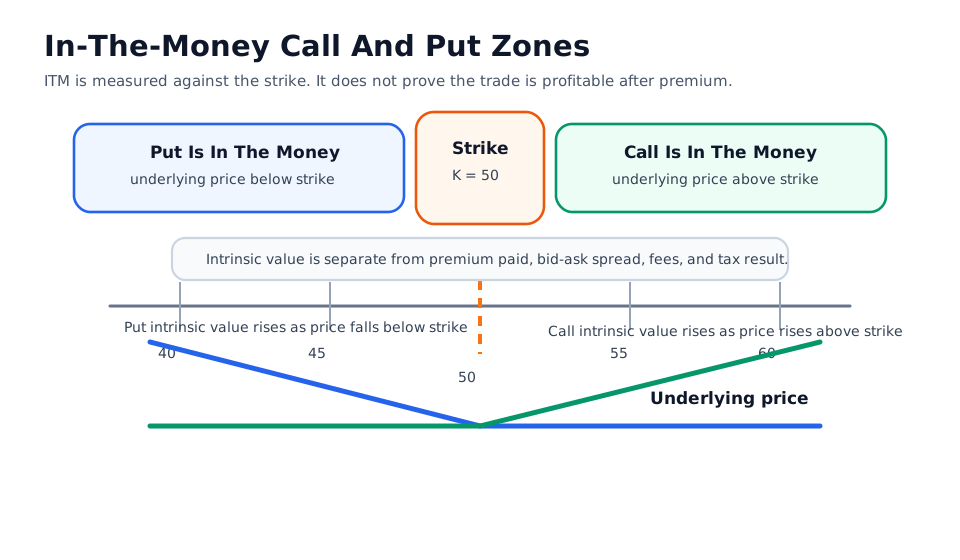
The diagram separates call and put moneyness. A price above the strike helps a call, while a price below the strike helps a put.
Call and Put Examples
| Option | Underlying price | Strike price | Intrinsic value | Moneyness |
|---|---|---|---|---|
| Call | $65 | $50 | $15 | In the money |
| Call | $48 | $50 | $0 | Out of the money |
| Put | $70 | $80 | $10 | In the money |
| Put | $85 | $80 | $0 | Out of the money |
If the $50 call above was purchased for $18, the option has $15 of intrinsic value but the trade is still down $3 before fees. That distinction is central: ITM is a moneyness label, not a profit label.
Why Traders Use ITM Options
ITM options are often used when a trader wants option exposure that behaves more like the underlying asset than an out-of-the-money contract.
Common reasons include:
- higher delta and more direct participation in the underlying move
- lower percentage of premium exposed purely to time decay
- stronger downside protection for protective puts
- stock-replacement exposure using calls
- spread construction where one leg needs existing intrinsic value
The tradeoff is cost. ITM options require more premium, so more capital is at risk if the thesis fails.
Expiration and Exercise Risk
ITM status becomes especially important near expiration. Listed equity options that are in the money at expiration may be exercised automatically under standard clearing and broker procedures unless contrary instructions apply.
For long options, automatic exercise can create an unwanted stock or cash position. For short options, assignment can create delivery, purchase, short-sale, or margin exposure. Those operational risks can matter more than the remaining option premium.
Authority Sources
Use public sources to verify the option framework:
- OCC Characteristics and Risks of Standardized Options covers standardized option risks, exercise, assignment, settlement, and product mechanics.
- FINRA’s options overview explains in-the-money status, expiration, premium, and automatic exercise risk for standardized equity options.
- Investor.gov’s options bulletin provides investor-facing context for option rights and risks.
For an actual position, rely on the option chain, trade confirmation, OCC product terms, exchange specifications, broker exercise rules, and account margin status.
Related Terms
- At The Money: A moneyness state where the underlying price is close to the strike.
- Deep In The Money Options: ITM options with substantial intrinsic value.
- Strike Price: The fixed exercise price used to classify moneyness.
- Option Premium and Value: The total market price of the option.
- Call Option: A right to buy the underlying at the strike.
- Put Option: A right to sell the underlying at the strike.
Review Checklist
- Identify whether the position is a call or put before judging moneyness.
- Calculate intrinsic value separately from total premium.
- Check whether the option is ITM because of a lasting move or a temporary price spike.
- Confirm exercise, assignment, and broker cutoffs before expiration.
- Compare ITM exposure with simply owning or shorting the underlying asset.