Omega in Options Trading
Omega, also called option elasticity or lambda, compares percentage option value change with percentage underlying price change.
Omega measures option leverage. It estimates the percentage change in an option’s value for a one-percent change in the underlying asset’s price. The same concept is often called option elasticity or lambda.
Omega is different from delta. Delta estimates an absolute price change in the option for a one-unit move in the underlying. Omega translates that exposure into percentage terms, which makes the leverage visible.
Formula
For a call option, a common approximation is:
where:
- \(\Delta\) is the option’s delta
- \(S\) is the underlying asset price
- \(C\) is the option price
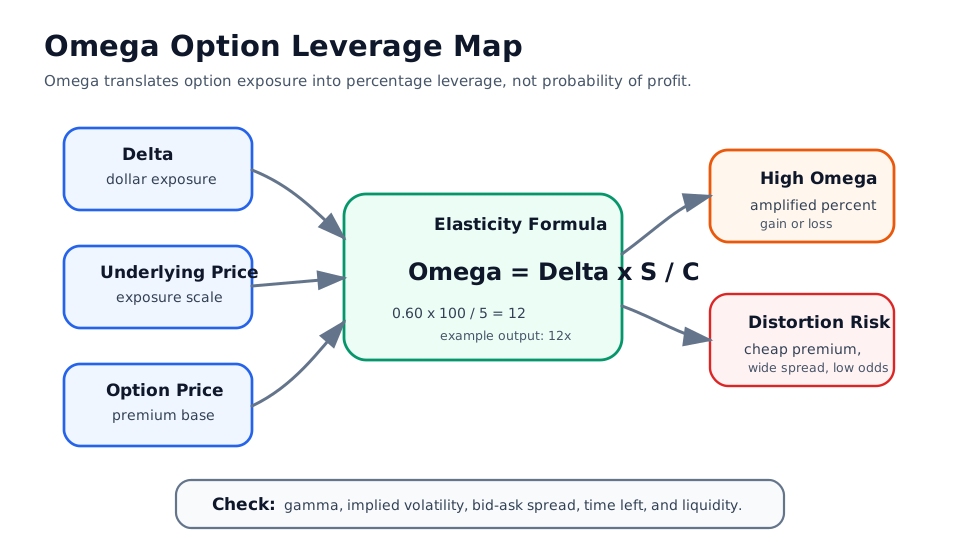
If an option has delta 0.60, the underlying price is $100, and the option price is $5, then:
An omega of 12 means a one-percent move in the underlying corresponds to an approximate twelve-percent move in the option value, all else equal.
The diagram shows why omega is a leverage diagnostic. Delta gives the dollar exposure, while omega scales that exposure by the option premium to show percentage sensitivity.
Why Omega Matters
Omega helps explain why options can feel powerful and dangerous at the same time. A small option premium can control exposure to a much larger underlying value, so the percentage move in the option may be much larger than the percentage move in the stock, index, currency, or futures contract.
That leverage is not free. Omega can change quickly because delta, option price, time to expiration, and implied volatility all change. A very cheap out-of-the-money option can show high omega while still having a low probability of finishing in the money.
Omega Versus Delta
| Measure | What it answers | Main limitation |
|---|---|---|
| Delta | How many dollars might the option change for a one-unit underlying move? | Does not express percentage leverage. |
| Omega | How many percent might the option change for a one-percent underlying move? | Can become unstable when option price is very small. |
| Gamma | How quickly might delta change as the underlying moves? | Needed because omega and delta are not fixed. |
| Vega | How much might value change if implied volatility changes? | Omega can mislead if volatility moves at the same time. |
Risk Controls
Use omega as a leverage diagnostic, not as a buy or sell signal. Before relying on it, check:
- whether the option price is so low that omega is mechanically inflated
- whether bid-ask spread and commissions erase the apparent leverage
- whether gamma could change delta sharply before the exit
- whether implied volatility could fall even if direction is correct
- whether the option has enough time and liquidity for the intended trade
The Options Industry Council’s volatility and Greeks overview describes lambda as an option leverage measure and provides broader context for the Greeks.
Related Terms
- Delta in Derivatives Trading: Input used in the common omega approximation.
- Gamma: Explains why delta and omega change as the underlying moves.
- Vega: Volatility sensitivity that can offset or amplify directional leverage.
- Option Value: The denominator in the omega calculation.
- Implied Volatility: Pricing input that can change option value even when direction is correct.