Theta Hedging
Theta hedging manages option time-decay exposure, usually by combining long and short options or dynamically adjusting a position.
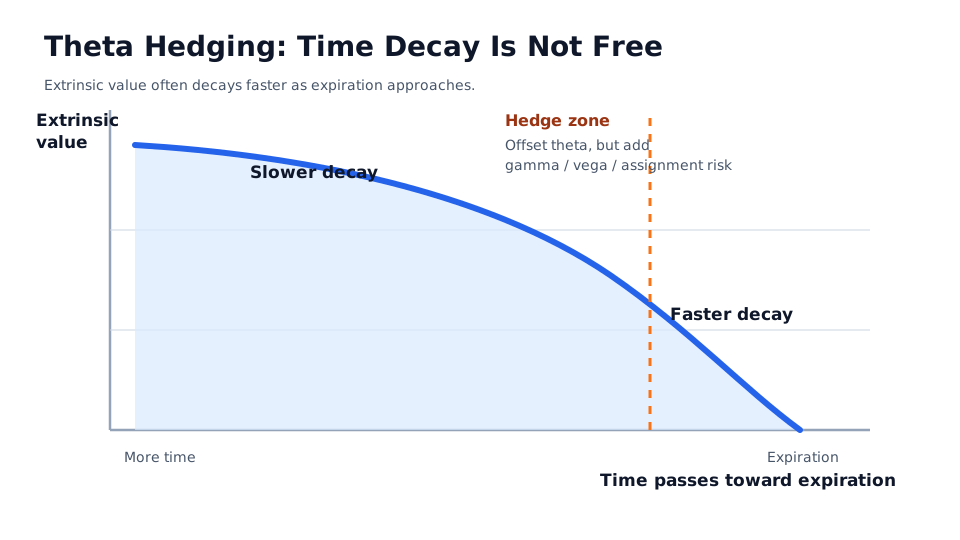
Theta hedging is the practice of managing exposure to option time decay. Theta estimates how much an option’s theoretical value changes as time passes, holding other inputs constant.
Theta hedging does not make an option trade safe. It usually exchanges time-decay exposure for other risks such as gamma, vega, assignment, margin, execution cost, or jump risk.
Formula
Theta is the sensitivity of option value to time:
where:
- \(V\) is the option’s theoretical value
- \(t\) is time
Sign conventions vary by platform. Many retail option chains show long options with negative theta because the option is expected to lose value as one day passes, all else equal. Short-option positions often have positive theta because the seller may benefit from time decay.
How Theta Is Managed
Theta hedging can mean different things depending on the position:
| Approach | How it affects theta | Main tradeoff |
|---|---|---|
| Sell options against long options | Offsets some negative theta | Adds assignment, cap, or spread risk. |
| Calendar spread | Uses different expirations to shape time decay | Sensitive to implied-volatility term structure. |
| Delta-hedged long gamma | Attempts to earn from realized movement | Usually pays negative theta and trading costs. |
| Short premium position | Seeks positive theta | Can carry large gamma, vega, and tail risk. |
| Reduce position size | Lowers theta exposure directly | Reduces intended upside or hedge coverage. |
There is no free theta hedge. A trader who removes time decay usually adds another exposure or pays for protection through spread cost, lower upside, or more complex rebalancing.
Example
Suppose a trader owns calls with total theta of -120 per day. If everything else stays constant, the model implies about $120 of daily decay. The trader could sell a shorter-dated call with +70 theta, leaving net theta near -50.
That hedge changes the position. The short call may cap upside, create assignment risk, and add sensitivity to changes in implied volatility and gamma near expiration. The better question is not simply whether net theta improved, but which new risks were accepted.
Theta Versus Delta Hedging
| Hedge focus | Main risk targeted | What remains |
|---|---|---|
| Theta hedging | Passage of time and option decay | Price movement, volatility, liquidity, and assignment risk. |
| Delta Hedging | Directional exposure to the underlying | Gamma, theta, vega, transaction cost, and gap risk. |
| Vega Neutral | Implied-volatility exposure | Delta, gamma, theta, skew, and term-structure risk. |
Public Source Checks
The Options Industry Council’s Greeks overview explains theta as a time-sensitivity measure and notes that values are theoretical guideposts. The OCC Options Disclosure Document should be checked for standardized-options risk disclosure before relying on any option strategy.
Related Terms
- Implied Volatility: Volatility input that can overwhelm expected time decay.
- Omega in Options Trading: Leverage measure that can change as theta erodes option value.
- Option Value: The value affected by time decay.
- Naked Option: Short-option exposure may have positive theta but large uncovered risk.
- Spread Strategy: Common way to reshape time decay and define risk.