Bull Spread
A bull spread is an options strategy with limited risk and limited profit that benefits from a moderate price rise.
A bull spread is an options spread designed to benefit from a moderate rise in the underlying asset. It uses two options with the same expiration date and different strike prices, creating limited risk and limited profit.
Bull spreads can be built with calls or puts. The payoff goal is similar in both cases: participate in upside up to a cap while controlling downside exposure.
How Bull Spreads Work
A bull spread usually uses:
- a lower strike option
- a higher strike option
- the same underlying asset
- the same expiration date
- one long leg and one short leg
The lower strike is more valuable than the higher strike for calls. The higher strike is more valuable than the lower strike for puts. That difference determines whether the spread starts as a debit or a credit.
Bull Call vs. Bull Put Spread
| Feature | Bull call spread | Bull put spread |
|---|---|---|
| Construction | Buy lower-strike call, sell higher-strike call | Sell higher-strike put, buy lower-strike put |
| Cash flow at entry | Usually net debit paid | Usually net credit received |
| Maximum loss | Net debit paid | Strike width minus net credit |
| Maximum gain | Strike width minus net debit | Net credit received |
| Best outcome | Underlying finishes at or above higher strike | Underlying finishes at or above higher strike |
Both versions are bullish, but the cash-flow profile and risk psychology are different.
Payoff Shape
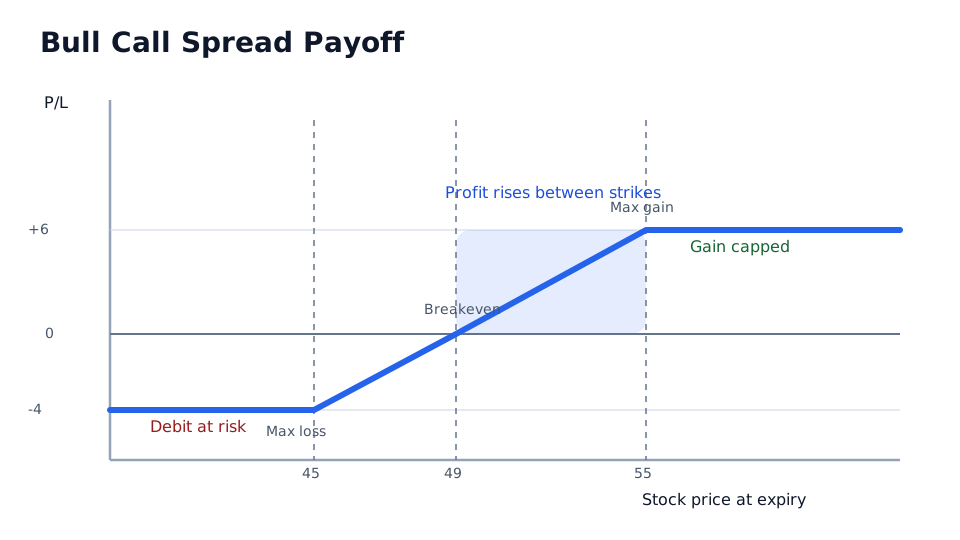
The diagram below shows a bull call spread: loss is limited to the debit paid, profit rises between the strikes, and gain is capped above the higher strike.
Worked Example
Assume a stock trades near $50. A trader builds a bull call spread:
- buys a
$45call for$7 - sells a
$55call for$3 - net debit paid =
$4
At expiration:
- maximum loss is
$4, if the stock finishes at or below$45 - maximum gain is
$6, calculated as$10strike width minus$4debit - breakeven is
$49, calculated as$45lower strike plus$4debit - gain is capped once the stock finishes at or above
$55
A bull put spread can target a similar bullish outcome, but it receives a credit and has maximum loss if the stock falls below the lower strike.
Public Source Checks
Use primary or regulatory sources before treating a bull spread as a simple bullish trade.
- The OCC Characteristics and Risks of Standardized Options explains standardized option contract mechanics, rights, obligations, exercise, assignment, and risks.
- FINRA’s options overview explains option approval, exercise, assignment, and why options are not appropriate for every investor.
- The Investor.gov introduction to options explains option premiums, calls, puts, and basic risk concepts.
- For a real trade, verify both legs, bid-ask spreads, open interest, expiration, exercise style, contract multiplier, assignment risk, and margin treatment through the broker or exchange data source used for execution.
Risk Controls
Before entering a bull spread, define:
- whether the thesis is a moderate rise, not an unlimited upside bet
- lower strike, higher strike, expiration, and net debit or credit
- maximum loss, maximum gain, and breakeven
- whether assignment or early exercise is possible on the short leg
- how the spread will be closed, rolled, or left to expiration
- whether the capped upside is worth the lower cost or premium received
Related Terms
- Spread Strategy: The broader family of multi-leg option structures.
- Call Option: Used to build a bull call spread.
- Put Option: Used to build a bull put spread.
- Strike Price: The two strike levels that define the spread’s payoff range.
- Option Premium: Determines net debit, net credit, breakeven, and maximum risk.
Review Checklist
Before relying on a bull-spread analysis, document:
- underlying, expiration, lower strike, higher strike, option style, and contract multiplier
- whether the spread is built with calls or puts
- net debit or credit, maximum gain, maximum loss, and breakeven
- price target and why a capped payoff fits the thesis
- bid-ask spread, volume, open interest, and multi-leg execution plan
- assignment, exercise, margin, and settlement treatment
- exit, roll, or expiration plan