Futures Rate
Market-implied rate derived from an interest-rate futures contract or another futures quote tied to a rate.
A futures rate is the rate implied by the trading level of a futures contract. The term is most common in interest-rate futures, where the futures quote is used to infer how the market is pricing a future policy rate, money-market rate, bond yield, or settlement rate.
The futures rate is not a promise that the future rate will occur. It is a market-implied rate based on today’s contract price, liquidity, risk premium, margining, and contract settlement method.
How It Is Used
| Use case | Practical question |
|---|---|
| Policy-rate expectations | What rate path is the market pricing? |
| Hedge design | Which contract month best offsets the rate exposure? |
| Relative value | Is a futures contract cheap or rich versus swaps, forwards, or cash bonds? |
| Risk management | How much P&L or margin stress follows a basis-point move? |
| Scenario analysis | How does the position respond if the curve reprices? |
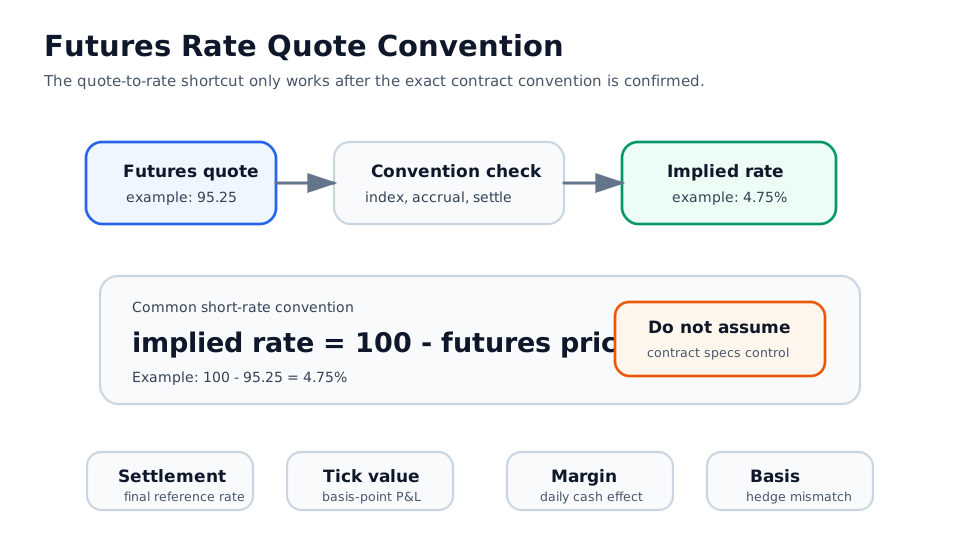
Many short-term interest-rate futures use a quote convention where the implied rate is related to 100 minus the futures price. Always verify the contract specification before applying that shortcut, because not every rate futures contract uses the same quote convention, accrual basis, tick value, or final settlement method.
For a public example of contract-specific design, CME Group’s SOFR futures product overview describes SOFR futures conventions and settlement details. The practical rule is simple: convert the quote only after confirming the contract specification.
Futures Rate Versus Forward Rate
| Term | Distinction |
|---|---|
| Futures rate | Implied by an exchange-traded futures contract and affected by daily margining. |
| Forward rate | Implied by spot rates or an OTC forward agreement for a future period. |
| Swap rate | Fixed rate that equates expected floating payments in a swap. |
| Realized future rate | The rate that actually occurs later, which can differ from the implied rate. |
What To Verify
- exact futures contract and delivery month
- quote convention and whether the price is inverse to rate
- basis-point value and contract multiplier
- final settlement rate and observation period
- margin and daily mark-to-market effect
- liquidity in the contract month used for the hedge or signal
Related Terms
- Forward Rate: Related market-implied future rate concept.
- Swap Rate: Fixed rate inferred from the swap market.
- Interest Rate: Underlying rate concept.
- Futures Price: Contract quote from which a futures rate may be inferred.
- Mark to Market: Daily revaluation process that distinguishes futures from many forwards.