Channel Stuffing
Channel stuffing pushes excess product to distributors near period end; analysts must test control, returns, side agreements, collections, and end demand.
Channel stuffing, also called trade loading, occurs when a supplier pushes more product into distributors or retailers than current end-customer demand reasonably supports, often near a reporting deadline. The practice becomes a financial-reporting concern when recorded revenue does not reflect the contract, transfer of control, expected returns, price concessions, collectibility, or other required accounting conditions.
Excess channel inventory is a warning sign, not automatic proof of improper revenue recognition or fraud. A genuine sale can occur before the distributor resells the goods. The conclusion depends on enforceable rights, delivery and acceptance terms, return privileges, side agreements, payment expectations, and the applicable accounting framework.
Key Takeaways
- Shipping product is not, by itself, enough to justify revenue; the contract and recognition criteria control.
- Pressure can be created through discounts, extended payment terms, return rights, price protection, financing, or informal promises.
- Analysts should distinguish sell-in to a distributor from sell-through to the final customer.
- Receivables, returns, credit notes, rebates, and distributor inventory can reveal demand that reported revenue obscures.
- A large quarter-end shipment can be legitimate when supported by customer demand and normal terms.
- Fraud requires evidence of intentional material misstatement or omission; an unusual sales pattern alone does not establish it.
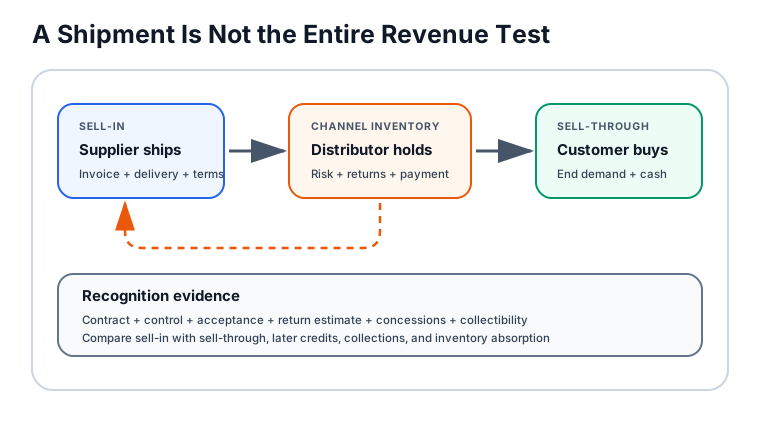
How Channel Stuffing Can Distort Results
A supplier seeking to meet a quarterly sales target can offer a distributor unusually favorable terms to accept more inventory before period end. If the supplier records all invoiced shipments as revenue without properly accounting for returns, concessions, acceptance, or control, current-period sales and profit may be overstated.
The economics often reverse later:
- the distributor slows new orders because it already holds excess product;
- customers return goods or request credits;
- the supplier grants price protection or extended terms;
- receivables remain unpaid or require a larger credit-loss allowance; and
- the next period begins with weaker sell-in even if end demand has not changed.
This timing effect can make one period appear stronger and the next weaker. It does not create sustainable end-customer demand.
Sell-In, Sell-Through, and Channel Inventory
| Measure | What it records | Why it matters |
|---|---|---|
| Sell-in | Supplier sales or shipments to a distributor | May support supplier revenue if recognition criteria are met |
| Sell-through | Distributor sales to the final customer | Provides evidence about end demand and inventory absorption |
| Channel inventory | Product held between supplier and end customer | Excess levels can lead to returns, discounts, or fewer future orders |
| Order backlog | Unfilled customer orders under stated definitions | Can include cancellable or nonbinding amounts |
| Cash collection | Payment received from the distributor | Supports collectibility but does not repair all recognition problems |
Sell-in and sell-through can differ for valid reasons, including seasonal stocking, product launches, geographic expansion, supply-chain buffers, and anticipated shortages. The relevant question is whether the financial statements and disclosures faithfully reflect the arrangement and uncertainty.
Worked Example: A Period-End Distributor Shipment
Assume a manufacturer normally sells 1,000 units per quarter to a distributor at USD 60 each. Near year-end, it ships 600 additional units after offering extended payment terms and an informal commitment to accept unsold goods. It records the entire USD 36,000 invoice as revenue and a 40% gross margin.
| Illustrative effect if the added sale is recorded | Amount |
|---|---|
| Additional recorded revenue | USD 36,000 |
| Additional accounts receivable | USD 36,000 |
| Additional recorded gross profit at 40% | USD 14,400 |
The arithmetic shows the reporting incentive, not the correct accounting. Reviewers need the distributor contract, purchase order, shipping and acceptance evidence, correspondence, return history, payment terms, credit approval, and any oral or written side agreement.
If the distributor controls the goods, has a substantive payment obligation, and the supplier has reliably estimated valid return rights, some or all revenue may be supportable under the applicable framework. If the distributor can return the excess without substantive risk, payment is doubtful, or undisclosed concessions alter the contract, recognition may need to be deferred or reduced. Legal and accounting conclusions depend on the complete facts.
Revenue-Recognition Questions
Is there an enforceable contract?
Confirm the approved parties, rights, payment terms, commercial substance, and collectibility assessment. Compare the signed agreement with emails, sales incentives, and subsequent credits.
Did control transfer?
Delivery matters, but so can customer acceptance, title, physical possession, repurchase obligations, consignment features, and the customer’s ability to direct use of the goods.
Are returns and concessions reflected?
Expected returns, rebates, price protection, coupons, credits, and variable consideration can reduce the amount recognized. An estimate based only on old return history may be unreliable when channel inventory suddenly rises.
Is the distributor economically independent?
Supplier financing, guaranteed resale, unusual recourse, related-party status, or an obligation to repurchase inventory can change the analysis.
Does the reporting period have proper cut-off?
Test orders and shipments immediately before and after period end. Trace them to delivery, acceptance, invoice, cash, returns, and the general ledger.
Financial-Statement Warning Signs
No indicator proves channel stuffing, but several aligned signals deserve investigation:
- revenue growth materially exceeds sell-through or end-market growth;
- accounts receivable grow faster than revenue;
- Days Sales Outstanding rises without a clear mix or timing explanation;
- sales concentrate unusually in the final days of a quarter;
- returns, rebates, credit notes, or price protection rise after period end;
- operating cash flow lags reported profit over multiple periods;
- distributor inventory or weeks of supply increases;
- payment terms extend while customer credit quality weakens;
- management emphasizes sell-in while withholding available sell-through data; or
- sales compensation rewards shipment volume without regard to returns or collection.
Acquisitions, foreign exchange, new products, customer mix, and seasonal stocking can also move these indicators. Compare like-for-like periods and read the notes.
How Auditors and Investigators Test It
Procedures can include:
- selecting large or unusual period-end transactions;
- confirming terms and balances directly with distributors;
- reading contracts, amendments, emails, and side agreements;
- tracing shipping documents and customer acceptance;
- reviewing cash receipts, returns, and credits after period end;
- comparing sell-in with sell-through and channel inventory;
- testing manual journal entries, overrides, and sales reserves; and
- interviewing sales, finance, logistics, credit, and channel personnel.
Customer confirmation alone may be insufficient if side agreements, collusion, or undisclosed concessions exist. Evidence from independent sources and subsequent events can be critical.
Channel Stuffing vs. Legitimate Stocking
| Legitimate stocking indicators | Higher-risk indicators |
|---|---|
| Customer requested quantity based on documented demand | Supplier pressure unrelated to expected sell-through |
| Terms consistent with normal contracts | Unusual discounts, payment extensions, or return privileges |
| Distributor bears substantive inventory risk | Supplier informally protects distributor from loss |
| Collections and sell-through follow expectations | Returns, credits, aging, or disputes increase |
| Inventory increase and assumptions are disclosed when material | Management withholds known channel build or concessions |
The distinction is evidence-based. Even a commercially aggressive shipment can have correct accounting if the terms are properly reflected. Conversely, ordinary-looking invoices can be misleading when hidden terms change the transaction.
Common Mistakes
Calling all distributor inventory channel stuffing. Distribution businesses normally hold inventory; the issue is excess stock and the terms behind it.
Using shipment value as a formula for false revenue. The recognized amount depends on control, returns, variable consideration, collectibility, and other facts.
Assuming cash collection proves valid recognition. Cash is useful evidence, but undisclosed repurchase, financing, or refund obligations can still matter.
Treating a red flag as a legal conclusion. Intent, materiality, responsibility, and governing law require separate evidence.
Ignoring the next quarter. Returns, credits, lower reorders, and collection delays often appear after the reporting date.
Official Sources
- IFRS Foundation: IFRS 15 Revenue from Contracts with Customers explains recognition based on satisfying performance obligations and transferring control.
- SEC: Staff Accounting Bulletin Topic 13 identifies excess channel inventory as a factor that can impair reliable estimates of product returns.
- PCAOB: AS 2401, Consideration of Fraud in a Financial Statement Audit addresses revenue-recognition fraud risks, management override, evidence, and professional skepticism.
- SEC: Financial Reporting and Accounting Fraud describes premature, fictitious, and otherwise distorted revenue-recognition schemes.
Related Terms
- Revenue Recognition: Principles governing when and how customer-contract revenue is recorded.
- Accounts Receivable: Customer amounts billed or otherwise receivable under the applicable accounting model.
- Inventory Turnover: A measure connecting inventory with cost of sales over a period.
- Quality of Earnings: Analysis of profit persistence, cash conversion, estimates, and comparability.
- Earnings Management: Accounting or operating choices intended to influence reported performance.
- Financial Statement Fraud: Intentional material misstatement or omission designed to deceive financial-statement users.
FAQs
Is channel stuffing always illegal?
Can a supplier recognize revenue before the distributor resells the goods?
What is the strongest channel-stuffing warning sign?
Does a rising DSO prove revenue was overstated?
This article provides general financial-reporting and fraud-risk education, not accounting, audit, legal, enforcement, or investment advice. Apply the governing accounting standards and obtain professional advice for specific transactions.