Aadhaar Enabled Payment System (AePS)
AePS is an NPCI-operated, bank-led system for supported banking transactions at business-correspondent and micro-ATM touchpoints using Aadhaar authentication.
The Aadhaar Enabled Payment System (AePS) is an NPCI-operated, bank-led system that lets an eligible customer perform supported banking transactions at participating business-correspondent and micro-ATM touchpoints using Aadhaar authentication. Depending on current bank and system support, services can include cash withdrawal, cash deposit, balance inquiry, mini statement, fund transfer, and related authentication functions.
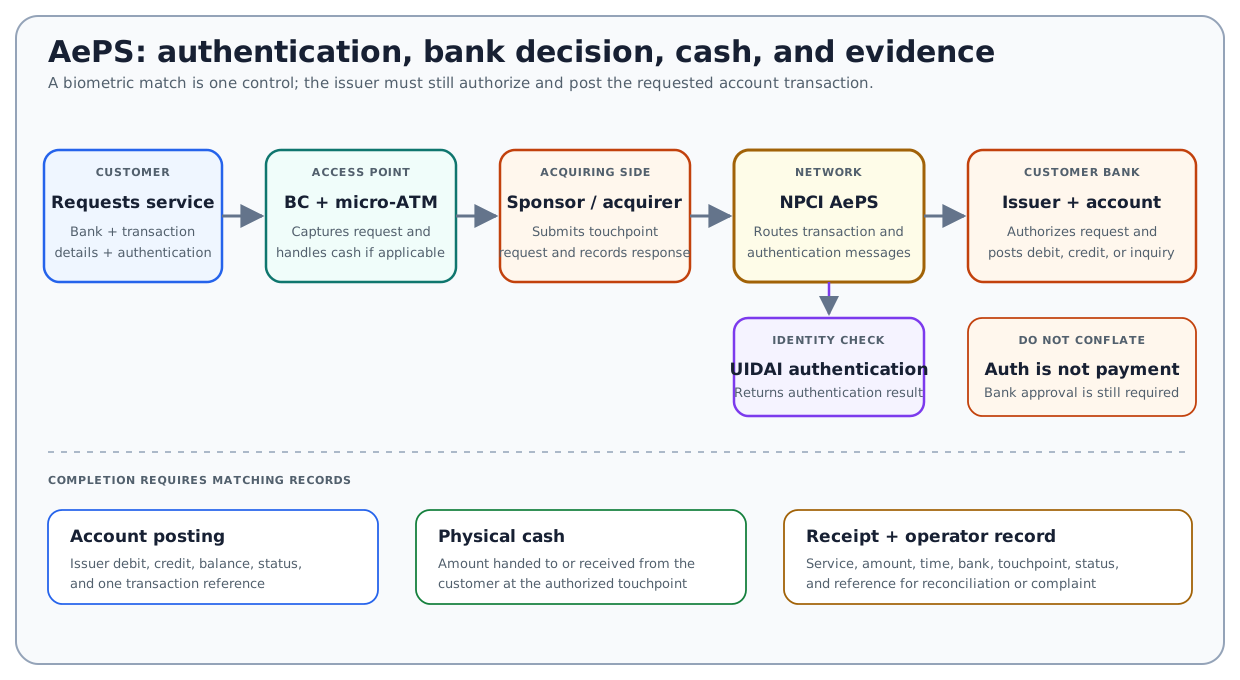
AePS does not store a separate customer balance. The transaction affects an Aadhaar-linked bank account maintained by the customer’s bank. Aadhaar authentication helps verify the customer, while the bank separately decides whether to authorize the financial transaction and posts any debit or credit.
Key Takeaways
- AePS is a bank-led payment and account-access system operated through NPCI arrangements; it is not a bank account, mobile wallet, or government-benefit balance.
- A customer typically uses an authorized business correspondent or another enabled touchpoint with a compliant biometric device or micro-ATM.
- Aadhaar authentication and bank authorization are different decisions. A successful identity match does not guarantee sufficient funds, service availability, cash availability, or transaction approval.
- The issuer bank holds the customer’s account. The acquiring or sponsor side supports the touchpoint that initiates the transaction.
- Cash movement, account posting, network status, receipt, and business-correspondent reconciliation must agree before a transaction is treated as complete.
- Aadhaar Payment Bridge System (APBS), BHIM Aadhaar Pay, UPI, and an ordinary card-based ATM transaction serve different purposes and should not be called AePS interchangeably.
What a Customer Uses
NPCI describes AePS as available through enabled touchpoints of participating banks. A typical transaction requires several of the following elements:
- an Aadhaar number or another identifier supported by the current process;
- a bank account linked for the applicable Aadhaar-based service;
- selection of the customer’s bank or bank identifier;
- the requested service and amount, if it is a financial transaction;
- biometric or other permitted Aadhaar authentication; and
- an authorized business-correspondent, micro-ATM, kiosk, or other supported device.
The exact customer journey, authentication method, transaction limit, fee, and service list can vary. A customer should review the amount and service shown on the device before authentication and obtain the transaction receipt or electronic confirmation required by the applicable process.
Participants and Responsibilities
AePS combines banking, agent, network, and identity-authentication roles:
| Participant | Main role | Evidence or question to check |
|---|---|---|
| Customer | Requests a service and provides the required authentication | Was the bank, service, amount, and operator correct? |
| Business correspondent or touchpoint operator | Provides authorized local access, operates the device, and handles physical cash where applicable | Was a receipt issued and did actual cash paid or received match it? |
| Micro-ATM or biometric device | Captures the transaction details and permitted authentication input | Was the device and application associated with the authorized provider? |
| Acquiring or sponsor-side institution | Supports the touchpoint and submits the request into the AePS arrangement | What request, terminal, operator, and response did it record? |
| NPCI | Operates the AePS network and applicable routing and scheme processes | What transaction reference and network status apply? |
| UIDAI authentication infrastructure | Returns an authentication response under the applicable Aadhaar framework | Did authentication succeed, fail, or encounter a technical error? |
| Issuer or destination bank | Holds the customer’s account and approves, declines, and posts the banking transaction | Did the account debit, credit, or balance inquiry match the network request? |
One bank can appear on both the acquiring and issuing sides. An on-us transaction generally stays within the same institution’s relevant roles, while an off-us transaction involves different participant institutions and NPCI routing between them. These labels describe participant relationships; they do not by themselves prove final cash delivery or account posting.
How an AePS Transaction Works
A simplified cash-withdrawal request can follow these steps:
- The customer asks an authorized touchpoint operator for an AePS cash withdrawal and identifies the relevant bank.
- The operator enters the service and amount into the micro-ATM or supported application.
- The customer checks the transaction details and supplies the required Aadhaar authentication through the supported device.
- The acquiring or sponsor-side institution sends the request into the AePS network.
- The authentication component checks the submitted identity input through the applicable UIDAI process.
- The issuer bank separately checks the linked account, available funds, limits, risk controls, and transaction request.
- A response returns through the network to the touchpoint.
- If approved, the operator provides the cash and the system produces a receipt or electronic transaction record.
- The customer bank, acquiring side, operator, and NPCI records are reconciled, including any failed, reversed, or disputed item.
The sequence is simplified. Authentication and transaction messages may use closely coordinated technical processes, but the analytical distinction remains important: identity authentication, bank authorization, account posting, and physical cash delivery are separate facts.
Supported Services
NPCI’s current AePS materials list financial and non-financial services. Availability depends on participating institutions and current system rules.
| Service | What the customer requests | Main completion evidence |
|---|---|---|
| Cash withdrawal | Debit an eligible bank account and receive cash from the touchpoint | Approved response, account debit, receipt, and cash received |
| Cash deposit | Give cash to the operator for credit to an eligible account | Cash receipt, transaction reference, and account credit |
| Balance inquiry | Retrieve the available or reported account balance | Inquiry response with no unintended financial posting |
| Mini statement | Retrieve a limited recent-transaction view | Statement details and bank confirmation if an entry is disputed |
| Fund transfer | Move funds between supported accounts under the applicable process | Remitter debit, beneficiary credit, and shared reference |
| Authentication service | Obtain a yes/no or other supported identity-authentication result | Authentication response, not an assumption that money moved |
| BHIM Aadhaar Pay | Pay an enabled merchant using Aadhaar authentication | Customer debit, merchant transaction record, and merchant credit or settlement |
A displayed or advertised service may not be available at every touchpoint. Limits can also depend on the bank, service, customer status, operator, cash position, and current requirements.
Worked Example: Cash Withdrawal
Assume a customer requests an INR 2,000 AePS withdrawal from an authorized business correspondent whose acquiring bank differs from the customer’s bank.
If the transaction completes normally:
- The customer bank approves and records an
INR 2,000account debit. - The AePS record identifies the transaction, amount, status, issuer bank, acquiring side, and touchpoint.
- The business correspondent hands the customer
INR 2,000in cash. - The customer receives a receipt or electronic confirmation for the same amount.
- The operator and acquiring institution reconcile the cash outflow against the approved transaction and applicable settlement records.
The customer’s bank debit and the physical cash are two sides of one transaction but are not the same evidence. If the account is debited and the operator does not provide cash, the customer should not accept a verbal assurance as the only record. The customer should retain the receipt or failed-message screen, note the operator and location, preserve the bank notification or statement, and promptly use the bank’s official complaint channel.
If the device reports failure before cash is provided, the customer should check the account and original transaction reference before allowing an immediate retry. Otherwise, a delayed status update can create an unintended duplicate withdrawal request.
Authentication Is Not Financial Authorization
Authentication answers an identity or credential question under the applicable process. Financial authorization answers whether the requested account transaction may proceed.
| Result | Possible meaning | Appropriate next check |
|---|---|---|
| Authentication failed | The submitted biometric or other authentication input did not produce the required match or encountered an error | Check the reason, device, biometric status, and permitted alternative or retry process |
| Authentication succeeded, transaction declined | Identity was authenticated, but the bank did not approve the requested financial action | Check funds, account status, limits, bank controls, and the response code |
| Transaction approved, cash not received | The financial request may have posted even though physical delivery failed | Preserve the reference, verify the debit, and raise a complaint promptly |
| Cash received, receipt unclear | Physical delivery occurred but documentary evidence is incomplete | Confirm the bank entry and request an appropriate transaction record |
| Balance inquiry completed | Account information was returned | Confirm that no financial debit or credit was unintentionally requested |
Biometric authentication should not be described as infallible. Quality, device, connectivity, enrolment, locking status, and other factors can affect the result. A successful authentication also does not prove that the transaction purpose was legitimate or that the customer was not deceived.
AePS Compared With Related Systems
| System or channel | Primary purpose | Important distinction |
|---|---|---|
| AePS | Supported banking transactions at enabled touchpoints using Aadhaar authentication | Combines agent or touchpoint access, bank-account processing, and Aadhaar authentication |
| BHIM Aadhaar Pay | Enabled merchant payment using Aadhaar authentication | A merchant-purchase use case, not a general label for every AePS cash or inquiry service |
| Aadhaar Payment Bridge System (APBS) | Routes eligible bulk benefit or other credits using Aadhaar-linked mapping | The beneficiary does not initiate each incoming bulk credit through a biometric touchpoint |
| UPI | Interoperable payment instructions through participating accounts, apps, UPI IDs, and QR codes | Common UPI use relies on an app and UPI authentication rather than an AePS business-correspondent interaction |
| Card-based ATM transaction | Account access using a payment card and applicable card authentication | Uses card credentials and card-network or ATM-switch processes rather than Aadhaar authentication as the defining feature |
| NACH | High-volume batch credits and mandate-backed debits | Designed for bulk and recurring files, not an individual cash interaction at a micro-ATM |
The systems may interact around the same customer. A government benefit can reach an Aadhaar-linked account through APBS, after which the customer may use AePS to withdraw part of the balance. The benefit credit and later cash withdrawal are separate transactions with separate references and evidence.
Why AePS Matters
AePS can extend selected banking services beyond a conventional bank branch or card-based ATM by using participating local touchpoints. This can be important where travel, branch access, card possession, device ownership, or digital connectivity makes other channels difficult to use.
The access benefit does not remove operational constraints. A business correspondent needs adequate cash for withdrawals, secure equipment, network connectivity, authorization from the relevant institution, and accurate transaction records. Banks and operators must reconcile physical cash with system and account entries. Customers still depend on the issuer bank for the underlying bank account and for resolution of customer-specific debits and credits.
Risks and Common Mistakes
- Unauthorized operator risk: A customer should use a touchpoint identified through the responsible bank or provider rather than assuming every biometric device is an authorized AePS endpoint.
- Social engineering: A biometric match or transaction approval can still accompany a misleading request, fake benefit claim, or operator misrepresentation.
- Status mismatch: The device response, network record, bank posting, physical cash, and receipt may temporarily disagree.
- Duplicate transaction risk: Retrying before checking the first request can create a second approved transaction.
- Cash discrepancy: The approved amount may differ from the cash counted or recorded at the touchpoint.
- Authentication failure: Biometric quality, locked biometrics, device problems, or connectivity can prevent a valid customer from completing a request.
- Privacy and credential exposure: Aadhaar details, bank information, receipts, one-time codes, and authentication processes should be handled only through official, necessary channels.
- Account-linking confusion: An Aadhaar association does not itself identify every account, prove current eligibility, or explain which account the bank will use under the applicable mapping.
- Agent liquidity: A network can be operating while a particular touchpoint lacks enough cash for a withdrawal.
- Outdated rules: Services, limits, fees, complaint routes, authentication methods, and participant status can change.
Customer and Operator Controls
Customers should:
- verify that the touchpoint is authorized;
- check the bank, service, and amount before authentication;
- keep the Aadhaar number, account information, one-time codes, and receipts private;
- count cash before leaving;
- obtain and retain the transaction record;
- compare the transaction with the bank statement or official account history;
- avoid repeated attempts until an uncertain first attempt is checked; and
- report an unrecognized or unresolved debit promptly through the bank’s official channel.
Business correspondents and financial institutions should separately reconcile the operator’s physical cash, device totals, approved network transactions, reversals, fees, and bank settlement. A bank reconciliation can identify differences, but it does not replace investigation of customer-level missing-cash or unauthorized-transaction claims.
UIDAI provides services for reviewing Aadhaar authentication history and locking or temporarily unlocking biometrics. Those controls can reduce specific risks but may also cause authentication attempts to fail while a lock is active. Customers should use only current official UIDAI channels and instructions.
How to Evaluate an AePS Transaction
- Identify the customer bank, touchpoint operator, acquiring or sponsor side, requested service, and amount.
- Record the date, timestamp, location, device or terminal details, and transaction reference shown on the receipt.
- Separate Aadhaar authentication status from bank authorization and account posting.
- For cash services, compare the approved amount, bank entry, receipt, and physical cash paid or received.
- For fund transfers or merchant payments, match remitter debit, beneficiary or merchant credit, and the shared reference.
- Preserve failure, reversal, complaint, and adjustment records rather than relying on screenshots alone.
- Check current NPCI, UIDAI, and bank guidance when eligibility, limits, authentication, privacy, or liability matters.
Official Resources
- NPCI: Aadhaar Enabled Payment System describes the bank-led model, supported services, current participant information, and system resources.
- NPCI: AePS Product Booklet explains the business-correspondent, micro-ATM, bank, authentication, and service model.
- NPCI: Register a Complaint provides a route for checking supported NPCI transaction records and forwarding complaints to the relevant member institution; unauthorized transactions should be reported to the customer’s bank.
- UIDAI: Biometric Locking explains the official biometric lock and temporary-unlock facility.
- UIDAI: Aadhaar Authentication History identifies the official history service and mAadhaar access route.
- RBI: Failed-Transaction Turnaround Times sets the framework for auto-reversal and compensation in specified failed domestic payment transactions, including defined AePS and Aadhaar Pay cases.
Product features and procedures can change. Official system material does not establish whether a particular customer received cash or whether a disputed account entry is valid; use the bank, touchpoint, and transaction records for an individual case.
FAQs
Is AePS a bank account?
Does successful Aadhaar authentication mean an AePS withdrawal succeeded?
Is AePS the same as Aadhaar Payment Bridge System?
What evidence should I keep after an AePS cash transaction?
What should I do if my account was debited but I did not receive cash?
Related Terms
- National Payments Corporation of India (NPCI): Operator of AePS and several other Indian retail payment systems.
- Authentication: Process for verifying identity or credentials before a covered action.
- Bank Account: Customer ledger relationship that records the AePS debit, credit, or balance.
- Cash: Physical money delivered or accepted in an AePS cash transaction.
- Withdrawal: Removal of funds from an account, including an eligible AePS cash withdrawal.
- Unified Payments Interface (UPI): NPCI-operated interoperable payment interface distinct from AePS.
- National Automated Clearing House (NACH): Batch system whose APBS component supports eligible Aadhaar-linked bulk credits.
- Aadhaar Payment Bridge System (APBS): NACH component that routes eligible bulk credits using Aadhaar-to-bank mapping rather than an AePS customer-authentication transaction.
- BHIM Aadhaar Pay: AePS-based acceptance mechanism for eligible purchases at participating merchants.
Educational Use
This article provides general financial education. It is not a recommendation to use a particular bank, business correspondent, identity service, or payment method and is not banking, legal, regulatory, privacy, cybersecurity, accounting, or dispute-resolution advice.